
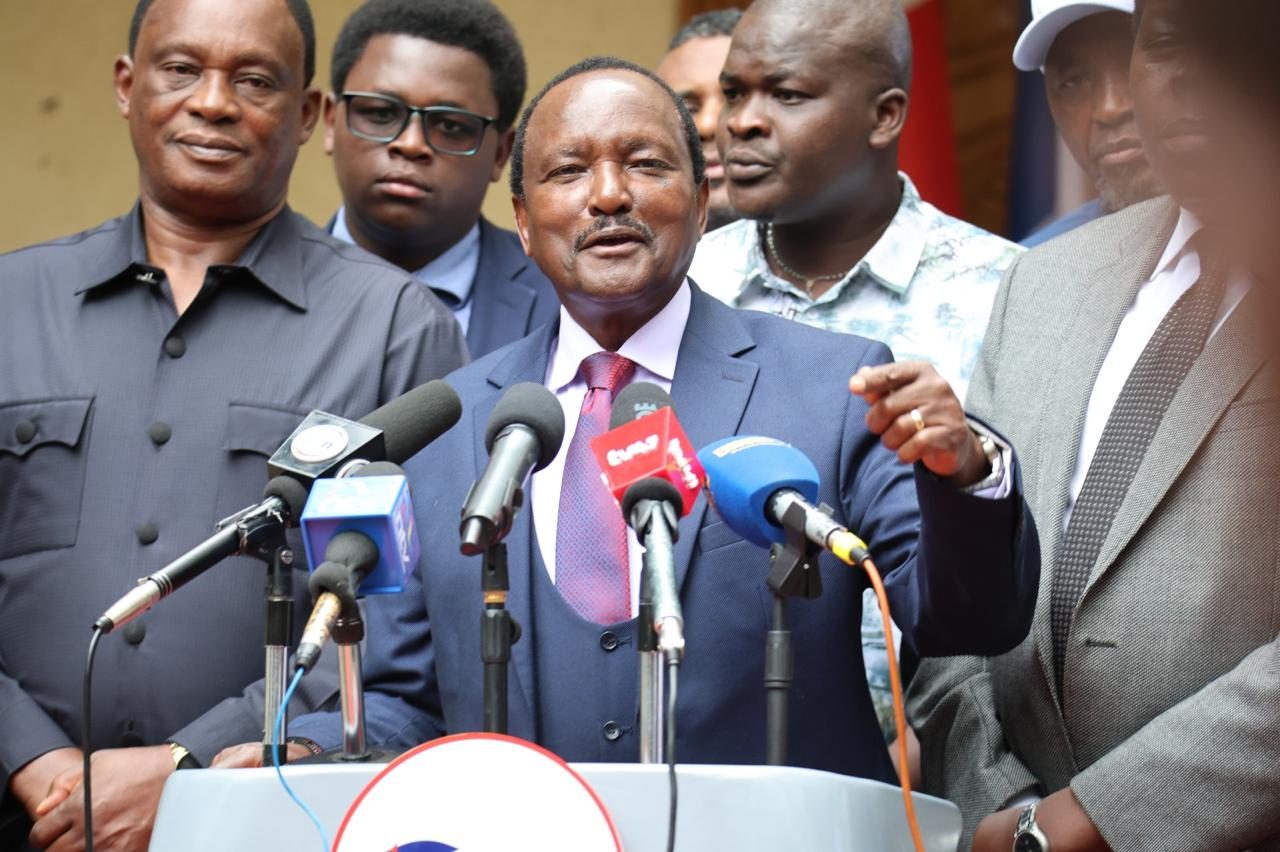
Kirinyaga Wiper official Gudson Muchina has challenged the claim that a recent elders’ endorsement settled who speaks politically for Mt Kenya.
In remarks given to People Daily on 24 September and published the following day, Muchina maintained that Uhuru Kenyatta remained the region’s political spokesperson. He disputed whether the Kirigiti ceremony endorsing Deputy President Kithure Kindiki amounted to a transfer of that role.
The dispute illustrates competing claims to regional influence ahead of 2027. Muchina’s view represents his political position; it should not be presented as the unanimous position of Mt Kenya residents.
Political Headache analysis
Three different kinds of authority are being discussed: the powers of a national office, recognition by a group of elders and the political support of voters. They can overlap, but evidence of one does not automatically establish the others.
Muchina’s argument concerns political recognition within the region. Kindiki’s position as Deputy President is a separate matter. The dispute therefore needs to be read as a contest over influence and representation, rather than as a process that by itself changes a national office.
For residents, the substantive question is what a claimed spokesperson intends to do with that influence. Does the role involve presenting specific development priorities, coordinating elected representatives or endorsing a presidential candidate? Those are different activities, and leaders should explain which mandate they believe they have received.
There is also a question of accountability: who can disagree with the spokesperson, and how would residents indicate that the person no longer represents their views? Without an answer, the title can say more about negotiations among prominent figures than about public consent.
Watch for the positions of local elected leaders, the organisations participating in subsequent meetings and any concrete agenda they adopt. Ultimately, residents’ choices remain theirs to make; no ceremony can substitute for evidence of those choices.
Who is being represented, and on what question?
A claim to speak for an entire region should prompt a basic question about its scope. Does the speaker mean a particular organisation, a group of elected leaders, the participants in a ceremony or residents as a whole?
Those categories are not interchangeable. A gathering may express the views of those who attended without establishing the position of everyone who did not. The same limitation applies to a political official who challenges the gathering's claim.
Muchina's statement is significant as an attributed intervention in the debate. It should not be expanded into a conclusion that every Wiper member, every Kirinyaga resident or all Mt Kenya voters hold the same view unless separate evidence supports that description.
Nor should a disagreement over political recognition be confused with the constitutional standing of a public office. The discussion concerns influence and representation. The report does not establish that a ceremony has the power to transfer the functions of a national office.
Keeping those distinctions visible helps readers understand what is actually being contested. It also avoids giving an informal political title a degree of certainty that the evidence does not establish.
Why endorsements matter without settling everything
Endorsements can matter because they show relationships and intentions. They may indicate whom an organisation wants to work with, which leader it wishes to hear from or how its members hope to influence a wider political discussion.
But the meaning depends on the organisation and the terms of the statement. An endorsement on one issue does not necessarily establish support for every policy or future electoral choice associated with the person receiving it.
The reporting task is therefore to describe the endorsement precisely. Who made it? What did they say they were endorsing? Was there a documented decision-making process, and were any different views expressed within the participating group?
The same questions should be asked of a counter-endorsement. A strong response from an opposing political camp is evidence that the claim is disputed; it does not automatically establish which side has the broader public mandate.
Readers interested in how national contenders seek support beyond established networks can also read our account of Kalonzo's planned Busia and Bondo tour. In both cases, public appearances and statements are signals to examine, not substitutes for evidence of voters' eventual choices.
Bringing the argument back to public priorities
The contest over a spokesperson becomes more useful when connected to what the role is supposed to achieve. A claimed mandate to present development priorities, coordinate political negotiations or back a candidate should be explained in those specific terms.
Without that clarity, different participants can attach different expectations to the same title. One may see it as cultural recognition, another as a negotiating role and another as an electoral instruction. Reporting should not assume that these interpretations are identical.
Residents also need room to disagree. A regional label can obscure differences between counties, generations, occupations and individual political preferences. Those differences cannot be inferred solely from which prominent figures are included in a ceremony or a rebuttal.
A useful follow-up would seek responses from the organisers of the endorsement and from the individuals whose roles are being discussed. It would ask them to define the mandate they believe exists and explain how they intend to exercise it.
It should also look for a substantive agenda. If the title is meant to help articulate residents' interests, the public ought to be able to identify those interests, question the proposed priorities and assess whether the promised representation produces any discernible action.
The dispute is therefore best understood as an argument over political influence, with several claims still requiring evidence. Muchina has stated his position. The wider question of representation remains open to scrutiny and, ultimately, to the choices residents make for themselves.
Photo details
WHAT TO WATCH NEXT
- Look for representative party decisions rather than claims of regional consensus.
- Track whether local endorsements translate into sustained organisation.