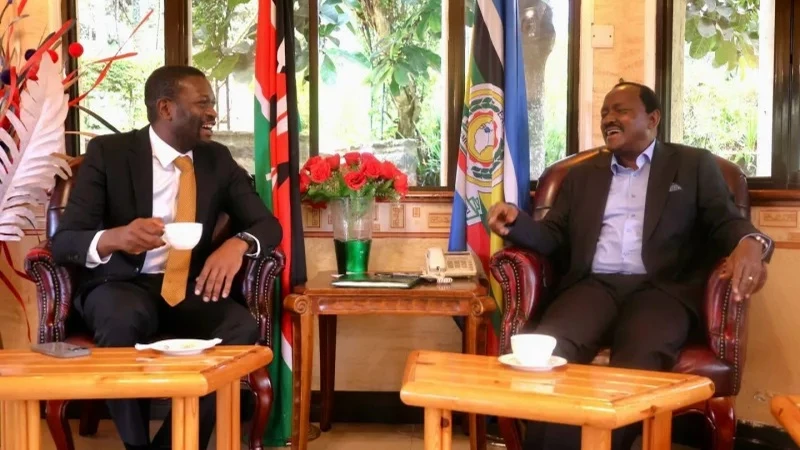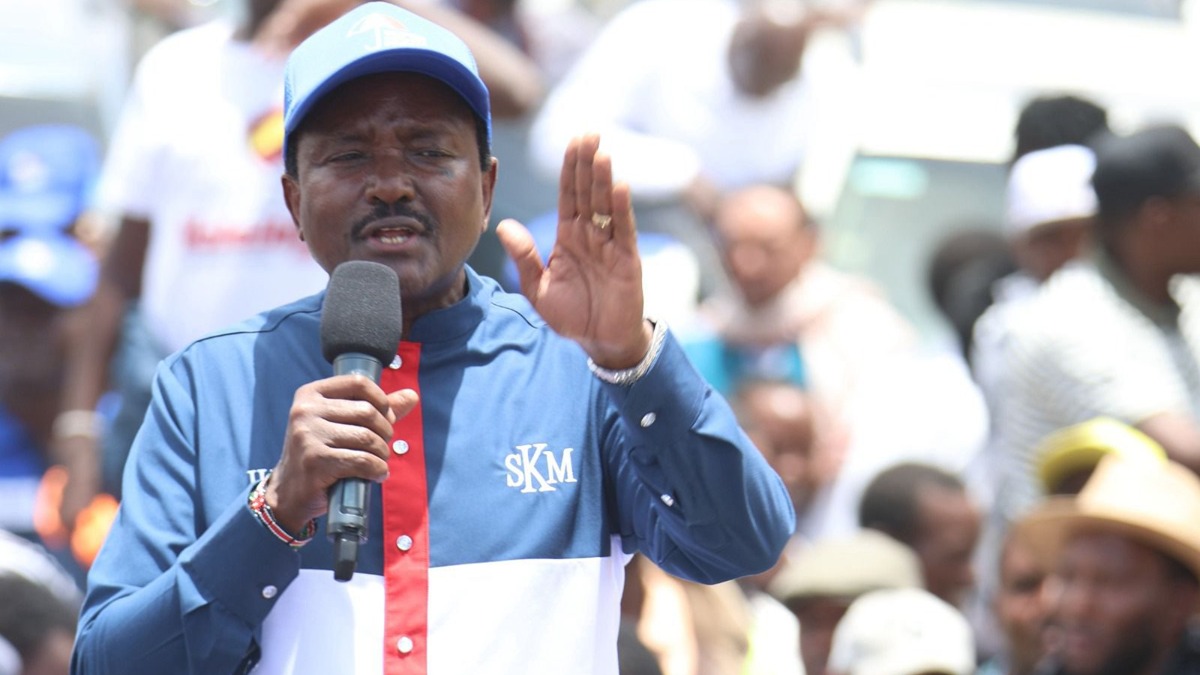
Wiper leader Kalonzo Musyoka has lined up weekend engagements in Western Kenya and Nyanza as he seeks support beyond his established political base.
Nation reported on 25 September that his itinerary included Bumala and Nambale in Busia on Saturday, followed by a church service and public engagements in Bondo on Sunday. The visits follow President William Ruto’s recent outreach in the region.
The political significance is the competition for voters long associated with Raila Odinga. Kalonzo’s history of working with Odinga gives him a connection to those constituencies, but support for a former alliance does not automatically transfer to an individual candidate.
Kalonzo was Odinga’s running mate in 2013 and 2017. His present challenge is to turn that shared political history into a reason for residents to support his own candidacy. The planned tour also comes as opposition leaders negotiate competing presidential ambitions.
Political Headache analysis
The electoral rules help explain why these visits matter. A first-round presidential victory requires more than half the votes nationally and at least a quarter of the vote in more than half the counties. A candidate therefore needs both substantial support and geographical reach. Constitution, Article 138.
For Kalonzo, organising outside his strongest areas could strengthen two things at once: his electoral prospects and his bargaining position with potential partners. But those gains depend on local relationships that survive after a visiting delegation leaves.
Residents have their own priorities, and a politician’s previous association with a popular leader does not settle their future choice.
The most useful signs to watch are whether local organisers take on continuing roles, whether the campaign establishes functioning branches, and whether Kalonzo offers specific commitments residents can revisit. Endorsements and crowds provide a snapshot; sustained organisation would give a clearer indication of the tour’s political value.
A joint opposition ticket would still require a separate agreement.
Why a visit is only the beginning
Busia and Bondo should not be treated as interchangeable stops on a national campaign map. A politician may receive a warm reception in both places for different reasons, and attendance alone cannot reveal what those reasons are.
Some people attend to hear a potential candidate. Others come through a local organiser, out of curiosity or to raise a particular grievance. A crowd can demonstrate an ability to mobilise an event without proving how its members would vote.
The more revealing question is who does the work after the visiting leadership leaves. A local network needs people who can convene meetings, explain policy, answer questions and maintain contact without depending on a national politician's presence.
That work is less visible than a rally, but it helps distinguish a lasting campaign from a succession of appearances. It also gives residents someone to approach when a promise made from a platform requires clarification or follow-up.
A useful follow-up would therefore identify the local conveners, ask what responsibilities they have accepted and establish whether a return visit has a defined purpose. None of those outcomes can be assumed from the advance itinerary.
The difference between reach and bargaining power
Kalonzo's outreach has two possible political audiences. The first is residents whose support he wants. The second is other opposition leaders assessing how much support each potential partner could contribute to a wider arrangement.
Those objectives can reinforce one another. Evidence of organisation outside an established base may make a politician a more attractive partner. But the same activity may also sharpen competition with another leader who considers those constituencies important to their own ambitions.
This is why presidential outreach and coalition negotiation should be reported together without treating them as the same process. A candidate can build an independent campaign while remaining open to a joint ticket. The public announcement of one does not settle the other.
For supporters, the important distinction is between a request to back a person and a request to support an agreed programme. If negotiations later produce a different candidate, leaders would need to explain how their earlier commitments fit the new arrangement.
Our report on Sifuna's party and coalition discussions examines the organisational side of that question. The common issue is whether cooperation produces clear responsibilities and procedures, rather than an assumption that supporters will automatically follow whichever agreement emerges.
What residents should be able to assess
A substantive county engagement should let residents connect a national pitch with a problem they recognise. The speaker should explain the proposed response, which public institution would deliver it and what would happen if another level of government must participate.
For example, a promise involving a local service needs more detail than a declaration that a future administration will act. Readers should look for a delivery mechanism and a funding explanation. This is a test to apply to the speech, not a claim about what Kalonzo has promised.
The same standard should apply to governing-party outreach. Comparing the specificity of competing proposals is more useful than assuming one visit proves momentum while another is merely symbolic. Both deserve scrutiny of their commitments and subsequent conduct.
Reporting after the engagements should distinguish what was announced beforehand, what actually happened and what participants agreed to do next. It should also identify whether the people presented as local supporters spoke for organisations or attended in an individual capacity.
Until those details are available, the strongest conclusion is limited but significant: Kalonzo is seeking a wider political presence. Whether that presence becomes votes, durable alliances or negotiating influence will depend on evidence that emerges after the tour, not on the itinerary itself.
Photo details
WHAT TO WATCH NEXT
- Confirm the outcomes of the Busia and Bondo engagements.
- Watch for functioning local branches and specific commitments residents can revisit.