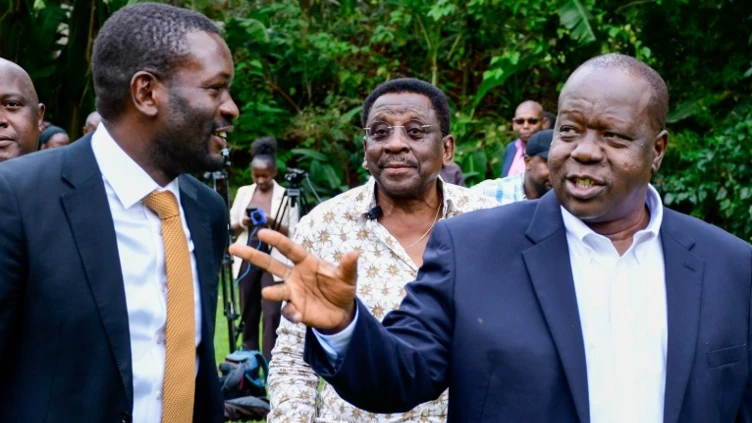
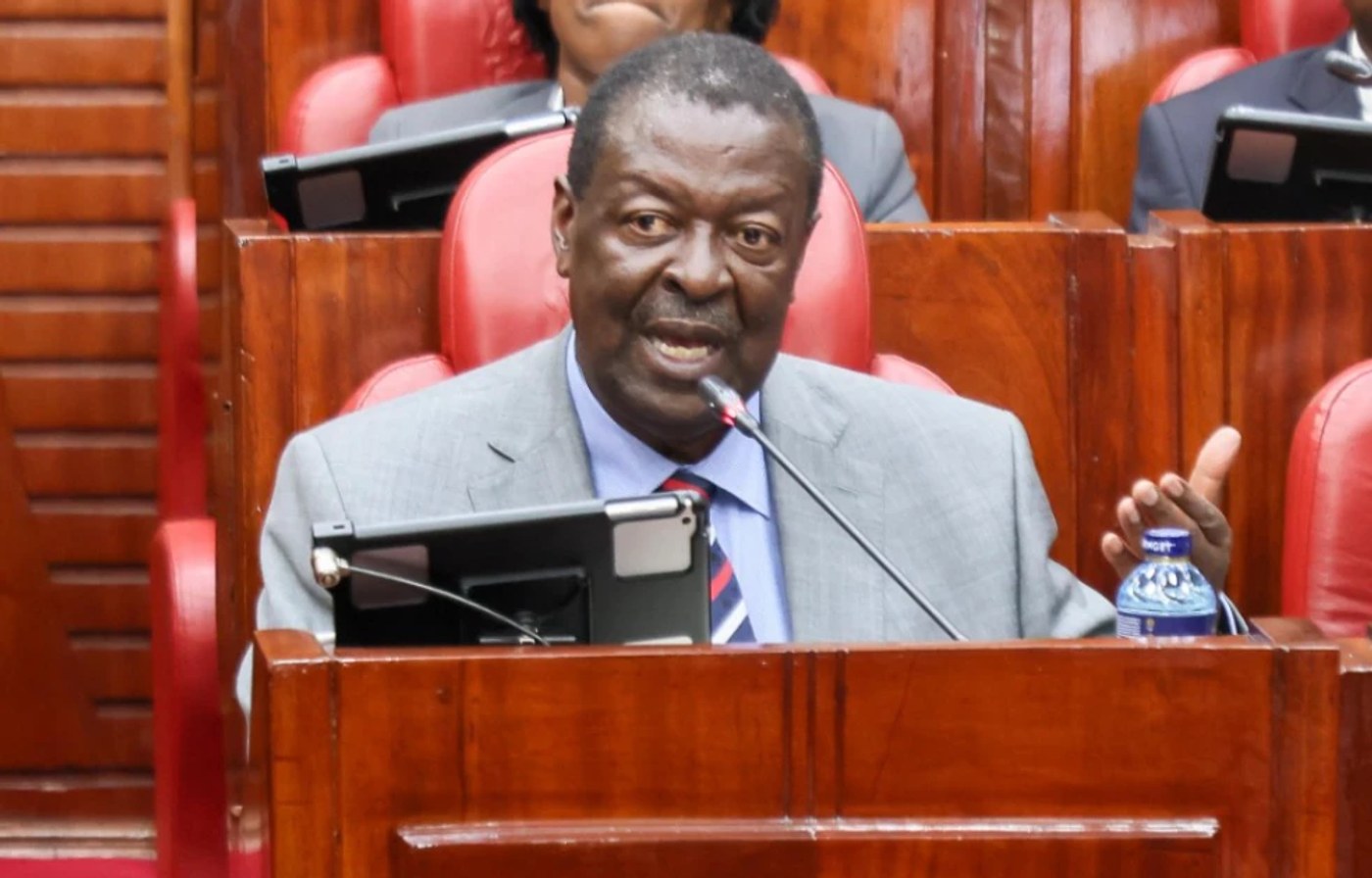
Prime Cabinet Secretary Musalia Mudavadi has questioned whether the political vehicle associated with Edwin Sifuna has the nationwide organisation needed to win elections.
People Daily reported his criticism of The Equitable Party, contrasting it with established parties such as ODM, UDA and Jubilee.
Mudavadi’s intervention focuses on party structures: local organisation, membership and the ability to turn public support into an electoral operation. His assessment of the newer formation’s prospects is a political opinion, not a verified election outcome.
Sifuna’s movement faces the practical work of establishing its identity and organisation ahead of the next general election. That process can be assessed through branches, officials, candidates and published procedures.
The criticism does not settle the question of the party’s popularity. It identifies an organisational challenge that can be tested as the formation develops.
Political Headache analysis: organisation is a claim that can be tested
Mudavadi's criticism points to a real distinction in political competition: attracting attention and maintaining an organisation are different tasks. A popular event can demonstrate that people are willing to attend that event. It does not, by itself, show how a party recruits members, selects candidates or sustains activity between rallies.
The reverse is also true. An established organisation cannot assume that its structures guarantee future support. Offices, officials and a recognised name may provide an advantage, but voters still decide whether the programme and candidates deserve their backing. Neither visibility nor longevity should be treated as a predetermined election result.
That is why the claim about national organisation should be examined through identifiable evidence. It is possible to ask where a party has functioning branches, how those branches communicate and what activities they carry out. Those questions are more useful than accepting an opponent's description as a complete inventory.
What functioning structures would show
A public list of officials and points of contact could help members understand how to participate. Published procedures could explain how local decisions reach the national leadership and how disputes are handled. Those details would make the organisation easier to assess without requiring readers to rely only on the size of its most visible gathering.
Candidate recruitment is another practical test. An electoral organisation needs a process for identifying people who intend to seek office and explaining how they will be selected. A growing list of interested aspirants can indicate activity, but it is different from a final slate or proof that those aspirants will win.
The costs and continuity of organisation also matter. A launch can concentrate resources on one moment. Maintaining local activity requires people, communication and reliable arrangements over time. This is a general organisational challenge, not a finding that the party discussed by Mudavadi has failed to meet it.
The response should be evidence, not just another insult
Sifuna's movement could answer the criticism most clearly by showing the structures it has established and identifying what remains in development. That would let supporters demonstrate progress while giving readers a realistic account of the work still ahead. A claim that everything is complete would need the same scrutiny as a claim that nothing exists.
Established parties can also be assessed against that standard. The existence of a branch on paper does not necessarily show regular activity or meaningful participation. A consistent test would examine how structures function rather than assign automatic strength to an older organisation and automatic weakness to a newer one.
This approach keeps the debate connected to voters. Local organisation should help people understand a party's programme, raise concerns and participate in choices. If the discussion is reduced to which national leader has the sharper line, that practical purpose can disappear from view.
A political prediction remains a prediction
Mudavadi is entitled to argue that a rival formation will struggle. Reporting that argument accurately does not require adopting it as the publication's own forecast. Evidence about organisation can inform an assessment, but it cannot establish a future election outcome in advance.
The useful next story would compare public claims with documented activity: branches, officials, procedures and candidate-selection plans. It should record both achievements and gaps, and allow the party to respond to specific findings. That would give readers a basis for judging organisational readiness that is stronger than either side's campaign language.
Until such evidence is assembled, the criticism remains an intervention in a political contest. Its central question is worth pursuing, but its conclusion should remain clearly attributed to the politician making it.
Photo details
WHAT TO WATCH NEXT
- Verified information about the party’s branches and officials.
- Candidate-selection plans and evidence of organisation beyond public rallies.