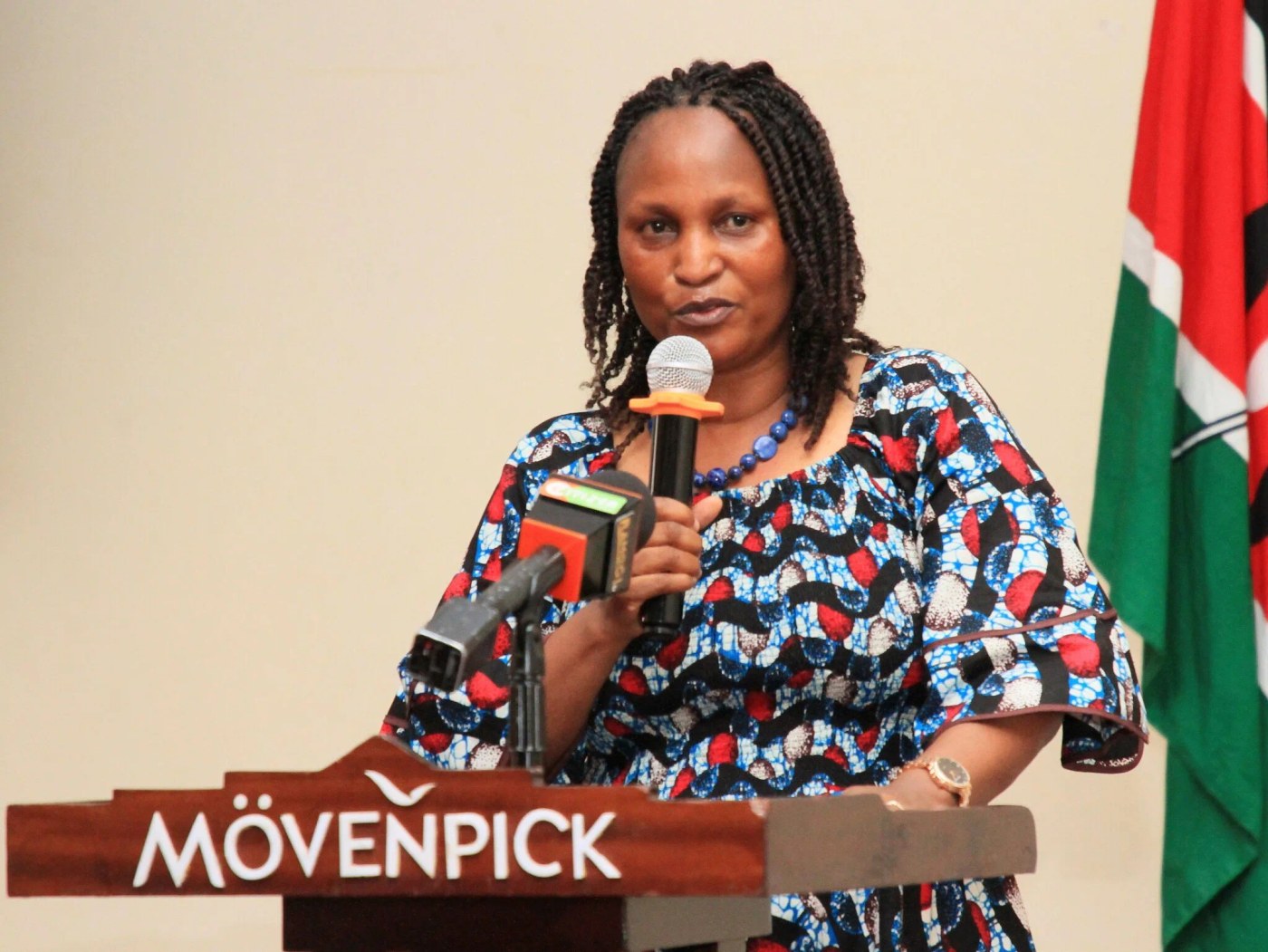
The Independent Electoral and Boundaries Commission will scrutinise the candidate lists political parties submit for the 2027 General Election to see whether they meet the two-thirds gender principle, the commission said on 5 October.
IEBC Commissioner Ann Nderitu said the commission wants every party list to meet at least the minimum gender threshold, so that the number of women on the ballot rises and compliance becomes something that can be checked before candidates are cleared.
She spoke at a policy dialogue convened by the National Gender and Equality Commission (NGEC), attended by legislators, constitutional commissions, women's parliamentary groups and development partners.
What the commission is proposing
Nderitu said parties hold the real power over how many women are elected, because they control nominations. She urged them to field women in their strongholds, where a party ticket gives a candidate a realistic chance of winning, rather than in seats they are likely to lose anyway.
"Our proposal as IEBC is that any list of candidates that comes to the electoral commission should meet at least the threshold of two-thirds," Nderitu said. She added that the commission tried this before and hopes to succeed this time.
She also said the job of improving women's representation does not belong to the IEBC alone. Parliament, political parties and other state and non-state actors all have a role, she said.
The legal gap
Article 27(8) of the Constitution requires the State to take legislative and other measures so that no more than two-thirds of the members of elective or appointive bodies are of the same gender.
County assemblies meet the requirement through nominated top-up seats. The National Assembly and Senate do not, and several attempts to fix this have failed, IEBC documents note.
Several proposals are now before Parliament. They include a Constitution of Kenya (Amendment) Bill in the Senate sponsored by Majority Leader Aaron Cheruiyot, and a Constitution of Kenya (Amendment) Bill, 2025 in the National Assembly sponsored by Gladys Boss, Jane Kagiri and Beatrice Elachi. The second seeks special seats in Parliament and proposes changes to Articles 90, 97 and 98.
Separately, the proposed Election Laws (Amendment) Bill, 2026 contains provisions that would require parties to ensure no more than two-thirds of their parliamentary candidates are of the same gender.
That distinction matters. Without a statute that says a non-compliant list must be rejected, the IEBC's scrutiny may amount to persuasion rather than enforcement. A party that submits an unbalanced list could challenge any attempt to block its candidates, and the courts would ask what law gives the commission that power.
Voters, parties and the State
NGEC chief executive Purity Ngina said voters exercise an individual right when they choose a man or a woman, but the State has a duty to make sure the final composition of Parliament meets the Constitution.
"We should not place that responsibility on the individual voter but to the State in accordance to the Constitution," she told the forum.
Gender Cabinet Secretary Hanna Wendot said her ministry submitted a report and draft legislative proposals to Parliament in 2024. These included a top-up mechanism for the National Assembly and Senate, similar to the one used in county assemblies.
NGEC chairperson Rehema Jaldesa expressed frustration that the issue returns at every election without a lasting solution. "Isn't it fatiguing? Are you not as tired as me?" she asked.
Why the timing is tight
Party primaries for 2027 will take place in the first half of next year. Any rule that changes how parties build their candidate lists has to be in place, and understood, well before then.
A constitutional amendment takes longer still. Changes to the composition of Parliament require the support of two-thirds of members in each House, and the process has repeatedly stalled since the Supreme Court first advised Parliament to act on the principle more than a decade ago.
There are also practical questions. Would the IEBC look at each party's list nationally, or seat by seat? Would a party that fields women only in seats it cannot win be treated the same as one that fields them in its strongholds? Nderitu's comments suggest the commission prefers the second outcome, but a numerical threshold alone would not guarantee it.
Independent candidates would sit outside any party-list rule entirely, as would the many aspirants who lose primaries and run on smaller party tickets.
The accountability angle
Kenya's main parties all endorse the gender principle in their manifestos. The test is in their nomination rules. Parties could publish, ahead of the primaries, how many women they plan to field in seats they have won before, and how they will protect women aspirants from violence and intimidation during nominations.
Parliament, for its part, has several bills in front of it and a clear constitutional duty. Members who back the principle in public can be judged by how quickly those bills move through committee and to a vote.
What to watch
First, whether the Election Laws (Amendment) Bill, 2026 is passed with the party-list provision intact, and whether it spells out what the IEBC can do with a non-compliant list.
Second, whether the IEBC issues formal guidelines or regulations on candidate lists, and when.
Third, the constitutional amendment bills in both Houses. Their progress, or lack of it, will show whether the 13th Parliament intends to be the one that finally meets the two-thirds requirement.
Photo details
WHAT TO WATCH NEXT
- IEBC Commissioner Ann Nderitu says party candidate lists for 2027 should meet the two-thirds gender threshold.
- The proposed Election Laws (Amendment) Bill, 2026 would require parties to field no more than two-thirds of parliamentary candidates of one gender.
- Constitutional amendment bills for top-up seats are pending in both the Senate and the National Assembly.
- Without a statute, the IEBC's scrutiny may be persuasion rather than enforcement.