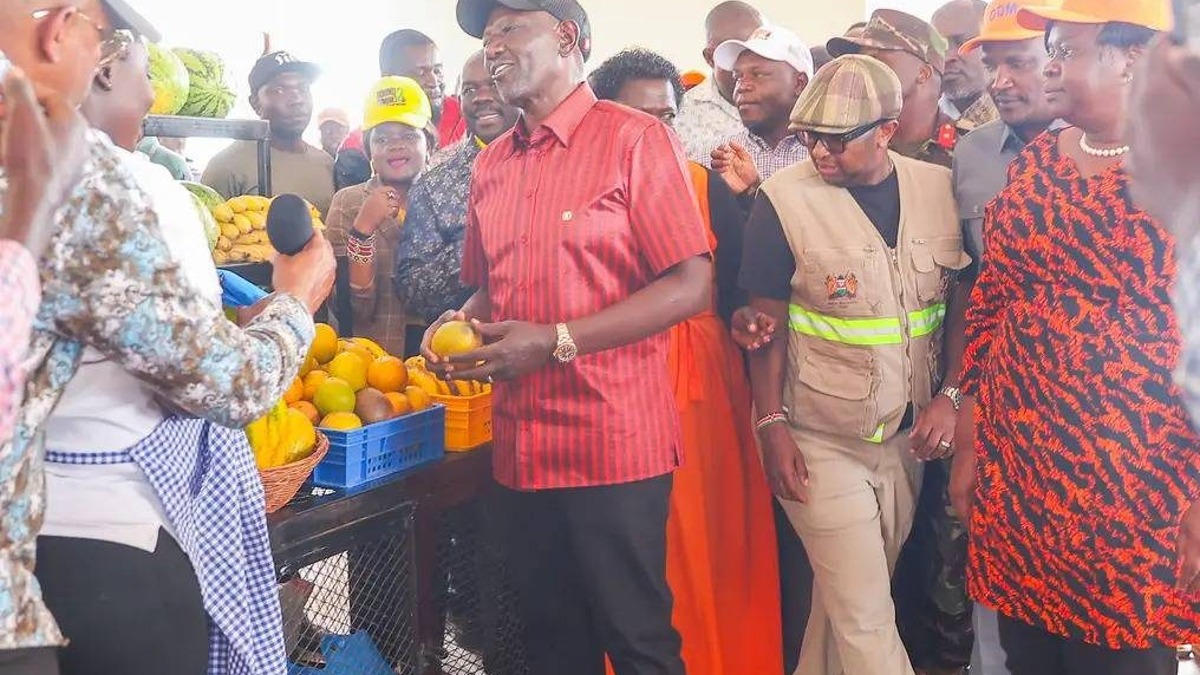
President William Ruto has proposed exploring domesticated buffaloes and improved camel breeds as additional sources of milk, citing India’s experience with buffalo dairy farming.
Speaking at the agriculture summit in Nairobi, Ruto said he had asked the livestock leadership to pursue the idea. Reporting by The Star and the Daily Nation links the proposal to concern over drought and reduced milk supplies.
The Daily Nation also reported higher retail prices in several Nairobi neighbourhoods and calls for better support to pastoralist producers. Those reported prices describe particular locations, rather than a uniform national price.
The proposal is an exploration of alternative production systems. The available reports do not establish that a buffalo import programme is operating or that it has already lowered household milk costs.
For farmers, the next questions concern suitable breeds, feed, water, veterinary support and buyers. For consumers, any longer-term diversification programme still needs to be distinguished from measures addressing immediate availability and affordability.
Political Headache analysis: an idea needs a production system
Diversifying milk production is a proposal about the future structure of farming. A household buying milk today faces a more immediate question: what is available, at what price and in what quantity? Keeping those timescales separate helps prevent a long-term proposal from being mistaken for a solution already reaching the shop counter.
The first task would be to define the problem the new breeds are intended to solve. Is the objective greater output per animal, resilience in particular conditions, a wider supply base or a different dairy product? Each objective would call for a different assessment. A successful example abroad is a starting point for investigation, not by itself a business plan for Kenyan farmers.
This distinction also protects farmers from taking investment decisions on the strength of a political announcement. An animal's potential production is only one part of a viable enterprise. The cost and reliability of feed, water, veterinary care, breeding services and transport all affect whether a farmer could make the system work.
Questions a feasibility study should answer
A useful study would identify the proposed breeds and the locations considered suitable for a trial. It would explain the evidence behind those choices, the size and duration of the trial and how results would be measured. Farmers would need to know both the expected benefits and the circumstances under which the approach might fail.
The study should also distinguish capital costs from recurring expenses. Buying animals or building facilities is different from paying for their upkeep throughout the year. An apparently attractive output figure can tell readers little about profitability unless it is considered alongside those continuing costs and a realistic sale price.
Animal health and environmental assessment would require the relevant specialists. This article does not establish that any particular breed is suitable or unsuitable for Kenya. The point is that such questions need evidence before a proposal is promoted as ready for widespread adoption.
Milk still needs a route to the buyer
Additional production would have limited value if farmers could not reliably collect, preserve and sell it. A practical plan would identify buyers, collection arrangements and the infrastructure needed between the farm and the consumer. It would also clarify whether the product is intended for an existing market or a new one that must be developed.
That is why the discussion should include producers and processors as well as public officials. Their questions would help reveal costs and constraints that a speech cannot cover. Consultation would be especially useful before public money is committed to a large programme, although the reports cited here do not establish such a commitment.
Existing dairy farmers remain central to the immediate supply question. Measures aimed at current production can be assessed separately from experiments with new breeds. A government could explain what each workstream is expected to achieve and when, allowing consumers to judge short-term delivery without waiting for a long-term trial to mature.
How to measure progress
The first meaningful milestone would be a published proposal with responsibilities, costs and a timetable. Later milestones could include trial results, farmer participation and independently assessed production costs. An announcement that a study has begun would be progress at one stage, but would still be different from demonstrated commercial success.
Ruto's intervention has opened a discussion about the range of animals used for dairy production. The public-interest test is whether that discussion produces evidence farmers can use and an explanation consumers can follow. Until then, the proposal should be reported as an idea under consideration rather than milk already added to the national supply.
Photo details
WHAT TO WATCH NEXT
- Whether the livestock department publishes a costed feasibility and implementation plan.
- What immediate steps improve supply from existing dairy farmers.