The most important document in a political coalition is not the photograph of its leaders shaking hands. It is the agreement explaining what those hands have signed away, and to whom. That is the document voters should demand before the next round of endorsements.
That is the conversation Kenyans should insist on as opposition leaders discuss a common presidential challenger. A single candidate can simplify an election. It cannot, by itself, explain how the country will be governed.
Political Headache’s November 9 report describes Kalonzo Musyoka and Rigathi Gachagua renewing their joint-candidate pledge at Kitengela the previous day. The report says they did not name a flagbearer. Fair enough: an alliance does not have to settle every question at one rally. But voters are entitled to ask what, beyond the candidate’s identity, is being negotiated.
The numbers explain why politicians are interested in combining forces. IEBC’s account of the 2022 presidential result records 7,176,141 votes for William Ruto and 6,942,930 for Raila Odinga. The difference was 233,211 votes. A close contest gives parties a powerful reason to negotiate rather than assume that their separate ambitions will somehow produce a common victory.
But the arithmetic also invites a convenient fiction: that a leader can walk into a negotiating room carrying every previous supporter in a briefcase. The 2022 totals describe choices made in that election. They do not establish how the same citizens will vote in 2027, still less what they will accept in exchange for their support. Anyone adding yesterday’s votes into tomorrow’s coalition should show the assumptions, not just the sum.
When Ruto and Odinga signed their March 7, 2025 pact, Associated Press reported that Odinga said: “We commit to hold regular consultations on pressing issues.” It was an assurance about how cooperation would work, which citizens could subsequently test.
That distinction matters. Consultation can help resolve a genuine national problem. It can also change the relationship between those exercising power and those expected to scrutinise it. The responsible journalistic question is what the agreement authorises and how the public can assess its consequences. A photograph cannot answer either question, however professionally everyone is arranged.
The test should be applied to a government–opposition pact and to an opposition alliance seeking office. Ask for the agreed text. Identify the promises that can be checked. Establish who has authority to negotiate for party members and what happens if a partner breaks the agreement. Where positions or public expenditure are involved, distinguish an announced intention from a lawful appointment or an approved budget.
These are not allegations of a secret bargain in the present talks. They are the documents and decisions needed to investigate a bargain properly. Labelling every negotiation a betrayal is as unhelpful as treating every handshake as a national breakthrough.
There is a serious case for cooperation. Parties with overlapping priorities need not spend an election defeating one another. A coalition can bring different constituencies into government and oblige politicians to compromise. Refusing every alliance in the name of purity would leave little room for parliamentary politics.
The trouble begins when compromise is explained only to the people dividing the positions.
What would the partners agree to protect if public money ran short? Which taxes would they keep? What would happen when one party wanted a spending programme that another considered unaffordable? These are governing questions. They cannot all be postponed until after a victory celebration.
Nor should the method of choosing the candidate be treated as private housekeeping. If an alliance proposes a poll, members should know who conducts it, what it measures and how disputes are resolved. If leaders will negotiate the choice, they should say so. A process does not become democratic merely because its eventual winner is popular.
None of this requires parties to publish every conversation. Negotiations need room for movement. But there is a difference between keeping a conversation confidential while it happens and asking citizens to endorse an agreement they are never allowed to examine.
The useful demand is a short public governing compact. Set out a few shared priorities, identify the disagreements that remain, explain the selection process and specify how partners will settle disputes. Put names against commitments. Give voters something they can return to when the speeches change.
There is another public interest here: the scrutiny that continues after an agreement. If cooperating parties support the same executive, their members still need to explain how they will question expenditure and failures in service delivery. Cooperation does not extinguish the voter’s need for independent examination. A coalition agreement should not become a reason why every uncomfortable question is dismissed as an attack on unity.
Such a document would also help opposition leaders themselves. An agreed procedure is easier to defend than an assurance that everyone trusts everyone else. Trust is valuable. It is a poor substitute for rules when several ambitious people want the same job.
President Ruto should face scrutiny of his own record, regardless of whether his challengers produce an impressive agreement. Government accountability does not depend on the opposition first passing an examination. Equally, dissatisfaction with the government should not purchase the opposition an exemption from questions.
Kenyans can want a change of leadership and still demand clarity from those offering it. That is not disloyalty. It is the beginning of a political relationship in which the voter has some bargaining power.
For journalists, the assignment is to report the terms, trace their consequences and return to the promises after the cameras leave. For voters, the demand is simpler: before asking us to endorse your agreement, let us read what you have agreed.
ABOUT THE WRITER
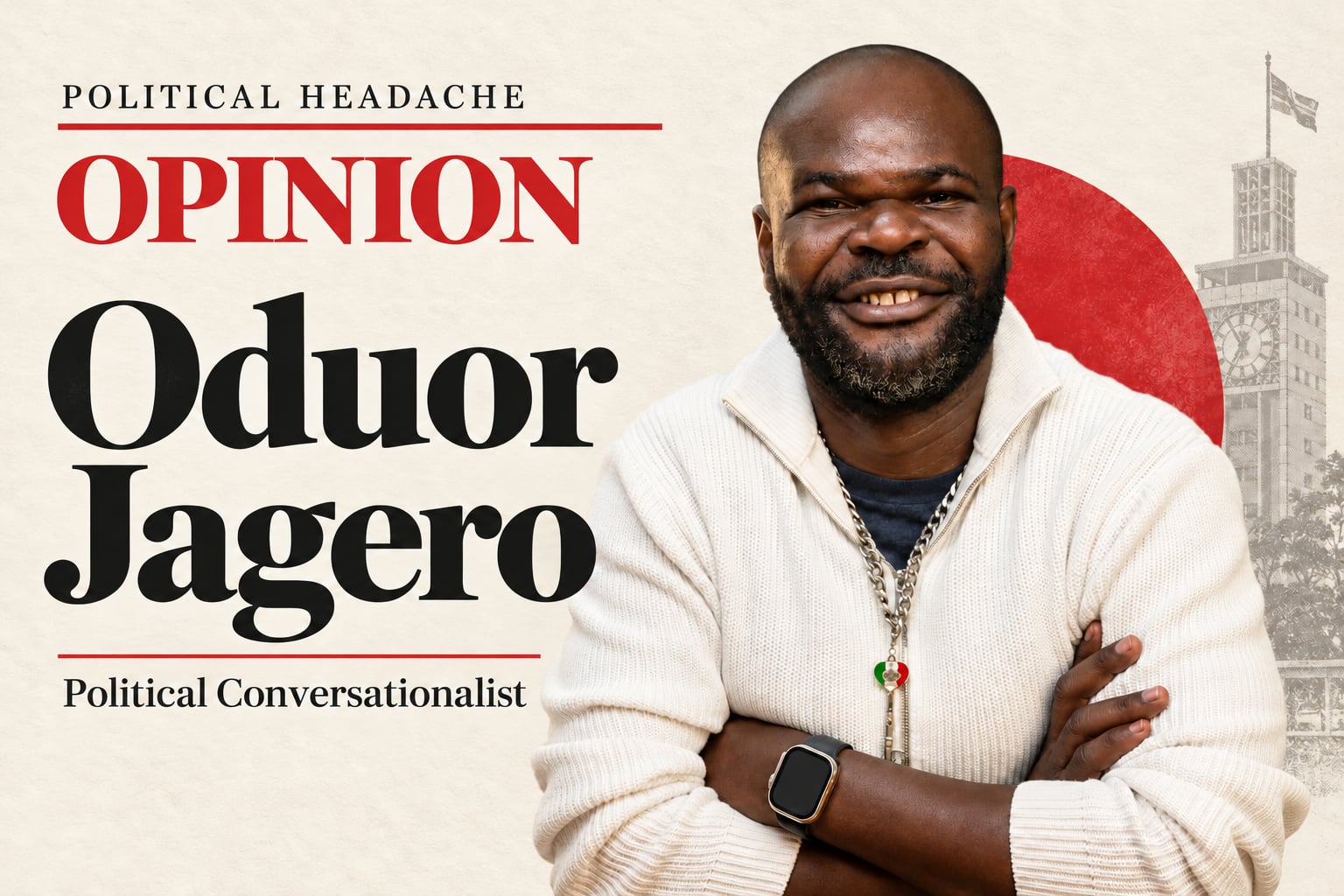
Oduor Jagero
Oduor Jagero is a journalist and podcaster. His public-interest commentary examines power, public money and accountability.
Read more by Oduor Jagero →