A political argument is often won or lost before either side supplies an answer. The advantage belongs to whoever persuades the public that their question is the one that matters.
That is the communications contest beneath the exchange between President William Ruto and opposition leaders over a single presidential candidate. The opposition’s unity message invites voters to consider whether a viable alternative can be assembled. Ruto’s demand for policy proposals invites them to consider whether that alternative is ready to govern. Those are different questions. Both deserve an answer.
Political Headache’s November 9 report describes Ruto challenging his opponents on jobs, education, roads and healthcare after Kalonzo Musyoka and Rigathi Gachagua renewed their common-candidate pledge at Kitengela. The report supplies the immediate exchange; it does not establish how voters received it. The analysis here concerns the messages’ construction, not a claim that either side has persuaded the electorate.
The unity message has a clear function. Before voters consider an alternative administration, they may need reassurance that its leaders can cooperate. Repetition can make that assurance recognisable. But recognisability is only the first step. Repeating an intention to agree does not demonstrate that an agreement exists, how a candidate will be chosen or how competing priorities will be reconciled.
Ruto’s response changes the frame. Instead of allowing unity to stand as evidence of readiness, he asks for the policy content behind it. It is a defensible challenge. It also suits an incumbent who can point to programmes, projects and the machinery of government. A communications analyst should recognise that strategic advantage without confusing it with proof that the programmes are delivering.
The trap for an audience is to accept the frame as a finding. An opposition’s incomplete policy explanation does not establish that the government’s record is satisfactory. Equally, a government failure does not establish that a particular challenger has a workable remedy. Political messaging becomes misleading when it encourages the listener to cross those gaps without noticing.
To see how a persuasive claim can remain incomplete, consider the health-financing discussion recorded by Parliament on May 29, 2026. Treasury reported more than 27 million SHA registrations and approximately five million active contributors. These were figures presented at that time, not current November totals. They describe different categories and should not be treated as interchangeable measures of coverage or successful treatment.
In that discussion, MP John Chikati said: “We need to know who has benefited.” It is a useful communications question because it identifies the missing connection between a large administrative number and a claim about people’s experience.
Registration can be a necessary achievement. It is not the same measure as access to a particular service, timely payment of a claim or reduced household expenditure. Nor would subtracting contributors from registered people produce a reliable count of people denied care: dependants and financing arrangements complicate that inference. Both an official success narrative and an opposition attack can mislead if they flatten those distinctions.
This is where numbers acquire rhetorical force. A large total looks authoritative; a percentage looks precise. Yet neither tells the reader what was counted unless the category, period and denominator are clear. A responsible spokesperson should explain those features. A responsible interviewer should ask for them before accepting the conclusion attached to the number.
The same principle applies to political language. At the March 2025 cooperation pact with Ruto, Raila Odinga said the arrangement would “help ease tension in our country”, according to Associated Press. That phrase presents cooperation as a public benefit. It directs attention towards stability and away from the competing question of how scrutiny of the executive will operate.
The framing does not make the statement false. Reducing tension may be a legitimate objective. But the audience should be able to examine the proposed benefit alongside the institutional cost or risk. A message can be sincerely held and strategically selective at the same time.
It is therefore worth being precise about propaganda. I would not use the term simply because a politician repeats a slogan or presents a favourable interpretation. Political advocacy necessarily selects an argument. The more serious concern arises when evidence is fabricated, contrary information is systematically concealed, sponsorship is disguised or emotional pressure is used to make examination of the claim seem illegitimate.
Those distinctions matter in a conversation where accusations of propaganda can themselves become a way to avoid answering criticism. The appropriate response to a disputed number is to examine its definition and source. Calling its bearer an agent of the other camp does not resolve the discrepancy.
There is also a difference between a message that energises committed supporters and one that earns wider trust. Applause at a rally and repeated clips on a social platform demonstrate activity in those settings. Without appropriate evidence, they do not establish persuasion among voters more broadly. A claim that a line has changed the national mood needs more support than a collection of enthusiastic comments.
For the public, the most useful discipline is to separate four things: the claim, the evidence offered, the interpretation and the action the speaker wants listeners to take. A project launch is an event. A completed project is a different claim. A measurable improvement in people’s lives is another. Political communication often compresses all three into a single image.
This does not mean every speech must become an audit report. Clarity and brevity are virtues. A short message can accurately summarise a complicated policy if fuller evidence is available and its limitations are not hidden. The danger is compression that changes the meaning rather than simply reducing the length.
Government and opposition will continue trying to set the terms of the debate. That is an ordinary part of competitive politics. The audience’s task is to notice the question each side prefers, then ask the question it would rather leave unanswered.
Unity deserves a governing explanation. Delivery deserves evidence of results. Neither camp should be allowed to choose only the examination it expects to pass.
ABOUT THE WRITER
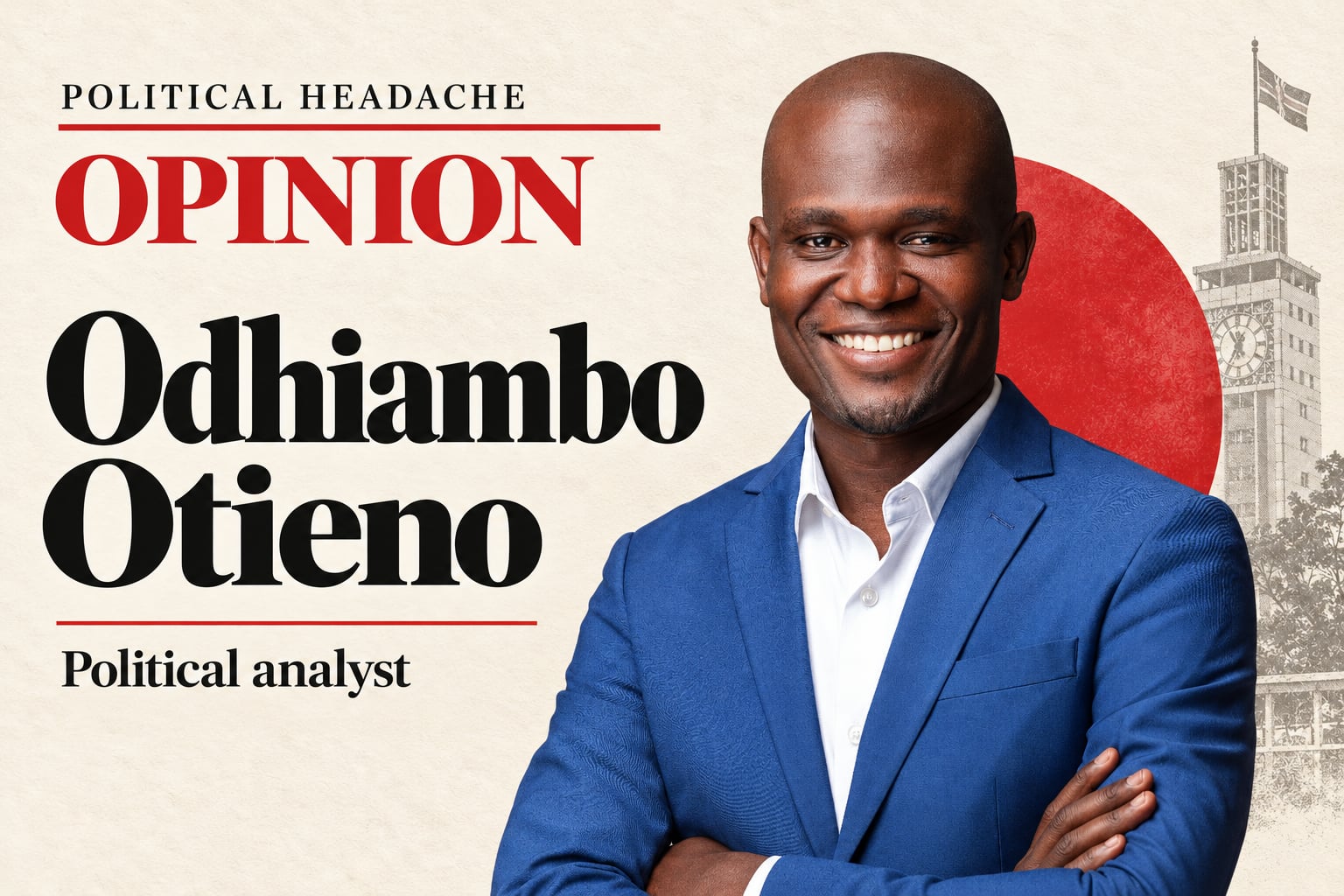
Odhiambo Otieno
Odhiambo Otieno is a communication strategist. He analyses political messaging, framing, propaganda and credibility across government and opposition.
Read more by Odhiambo Otieno →