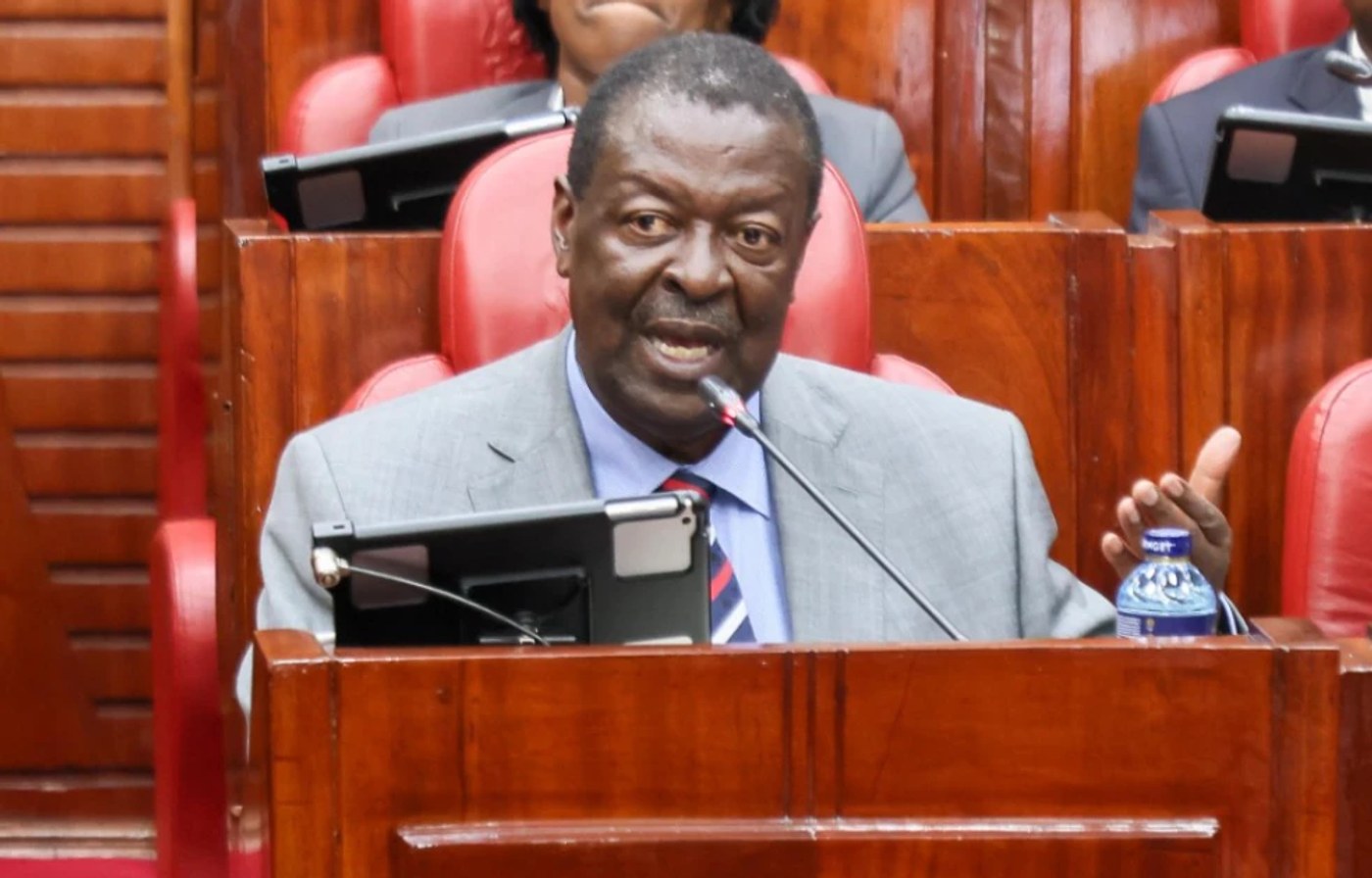
At least 354 Kenyans who travelled to Russia and joined its war against Ukraine are unaccounted for, Prime Cabinet Secretary Musalia Mudavadi told senators on Thursday.
Mudavadi, who also holds the Foreign Affairs docket, appeared before a joint Senate committee on Labour and Defence. The committee is considering a petition on the recruitment of Kenyans into the Russian military and the detention of Kenyans in Ukrainian prisons.
The government has helped 62 Kenyans return home, he said. Petitioners told the same committee that 841 Kenyans are unaccounted for, more than twice the official figure.
Missing, not dead
Mudavadi explained why the government uses the term missing in action. "It's because we cannot verify whether the person is dead or not. So we have to use the term missing in action," he told the committee.
He said declaring people dead would oblige the state to produce bodies. For families, the label carries a practical cost: without a confirmed death, there is no burial, no death certificate and often no way to settle estates or claim benefits.
He said some of those involved "left even without informing their own families where they were going," which made tracing difficult. He described the government as "chasing after the event."
Diplomacy as the only tool
"Kenya does not have the capacity, militarily, to enter into a war zone, in Russia or Ukraine," Mudavadi said. The government relies on diplomacy, which he described as "the only way."
Kenya is exploring direct talks with Ukraine, or engagement with Russia, so that Kenyans held as prisoners of war are included in prisoner exchanges. Kenyans who escape are housed and fed at the Kenyan embassy in Russia while their travel home is arranged, he said.
"Our mission is to help as many Kenyans as possible, who may be on the front lines, to come back home," he said.
No law, no fund
The most striking admission concerned the state's tools. "There is no law, no fund, that is designated for this," Mudavadi said. He said a proposed framework would create a welfare fund for rescuing and repatriating Kenyans caught in foreign conflicts, subject to approval by Parliament.
He also said contracts between Kenyans and Russian military recruiters were private agreements that did not involve the Kenyan government.
Mudavadi reminded senators that Section 58 of the Penal Code makes it an offence to enlist in a foreign government's armed forces without the President's consent. He said the government's priority was safe return, not prosecution.
That is a sensible position. Many of those recruited say they were promised civilian jobs. A government that threatened returnees with prosecution would discourage families from coming forward with information.
Whose numbers?
The two figures, 354 and 841, need reconciling. The government's count is drawn from cases brought to its attention. The petitioners' figure may include people whose families never contacted the authorities, or people counted twice. Neither number has been independently verified.
The official figure has grown fast. In May, Mudavadi told a Senate committee that 19 Kenyans may have died in Russia and 32 were missing in action, out of 291 known to have enlisted. Intelligence services then estimated that more than 1,000 Kenyans had been recruited, and 53 had been repatriated. Deputy Foreign Minister Abraham Korir Sing'oei at the time called Russia's use of Kenyans "unacceptable".
The rise from 32 missing in May to 354 in October suggests either that many more cases have come to light or that the government is now counting differently. Mudavadi did not explain the change on Thursday, and no updated count of the dead was given. Senators should ask for both.
Nyamira Senator Okong'o Omogeni raised the case of a constituent, Onyancha Tom Nyakamba, who contacted his family around February 2026 and has not been heard from since. Stories like his explain why families are pressing the Senate rather than waiting on diplomatic channels.
Petitioner Peter Kamau, whose relative died in the war, has led families in reading out their grievances and pressing the government for answers.
The recruiters
No recruitment agents in Kenya were named at Thursday's hearing. That is a gap. Kenyans were not conscripted from their homes; they were recruited, often with promises of jobs, and travelled on documents that someone helped arrange.
If the government regards the recruitment as possible trafficking, investigators should be able to say how many recruiters have been identified, how many arrested and how many charged. Anyone accused would be entitled to a fair trial, but the public is entitled to know whether anyone is being pursued.
What to watch
First, a reconciled list. The Ministry of Foreign Affairs and the petitioners should compare names, so that families know whether their relative is on the official register.
Second, the proposed welfare fund. Parliament will need a bill or regulations, with clear rules on who qualifies and how money is spent.
Third, prisoner exchanges. Whether Kenya secures the inclusion of its citizens in any Russia-Ukraine exchange will be the clearest measure of diplomatic success.
Fourth, the Senate committee's report on the petition, and whether it recommends action against recruiters.
Photo details
WHAT TO WATCH NEXT
- Mudavadi told a joint Senate committee on 8 October that at least 354 Kenyans who joined Russia's war are missing.
- Petitioners say 841 Kenyans are unaccounted for; 62 have been repatriated.
- There is no law or dedicated fund for rescue or repatriation; a welfare fund has been proposed.
- Kenya is seeking to include its citizens in Russia-Ukraine prisoner exchanges.