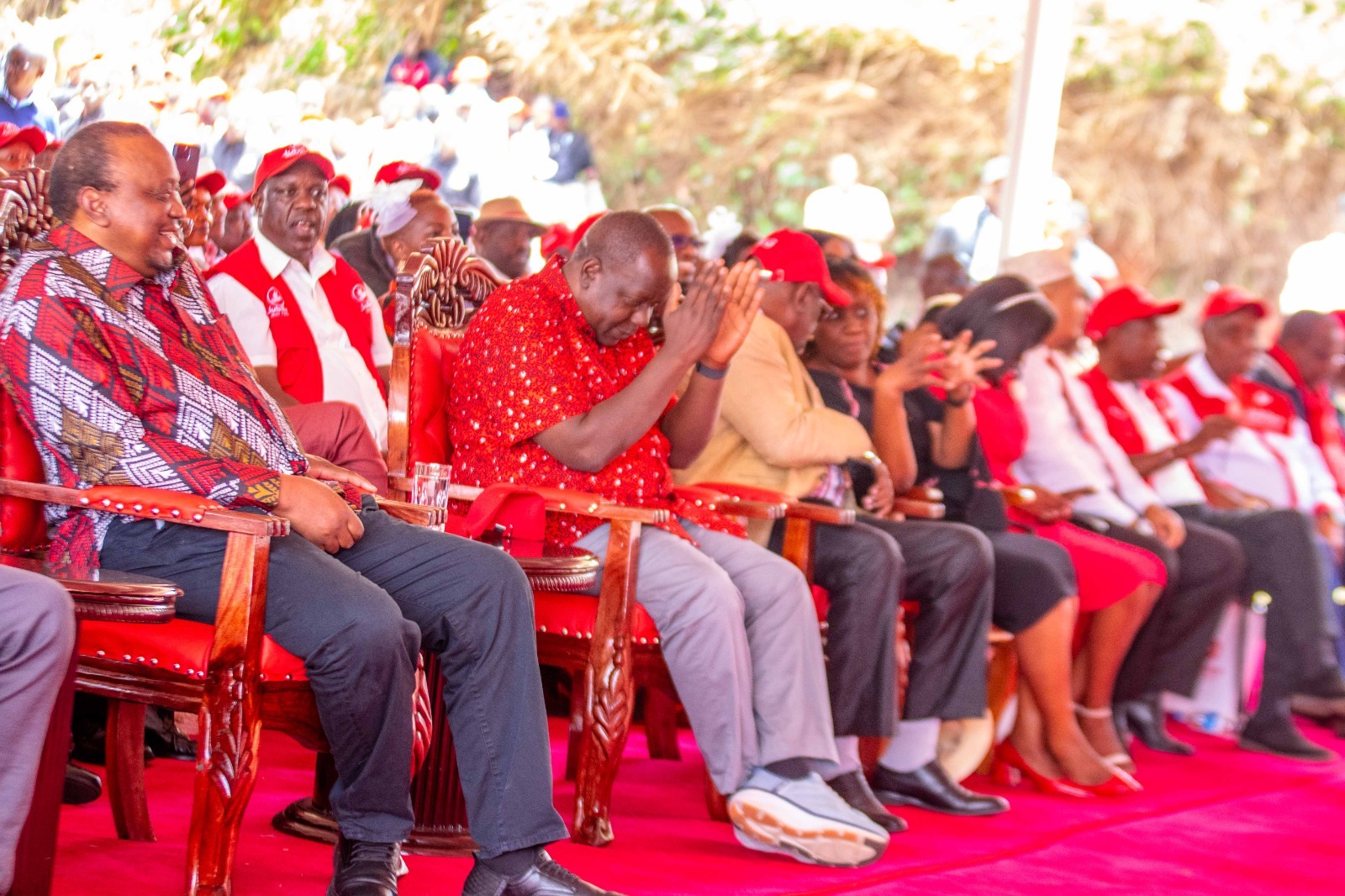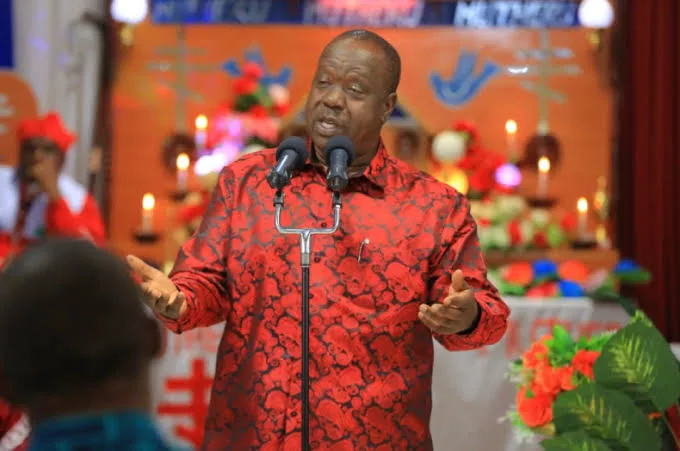
Fred Matiang’i has announced a Narok visit for Sunday, 27 September, with Ndindi Nyoro, James Orengo and Jeremiah Kioni listed among the accompanying leaders.
According to People Daily’s 25 September report, the programme begins with worship at Dominion Church in Olerai before a public engagement in Narok Town.
The planned appearance brings together politicians associated with different opposition organisations. That makes the lineup politically noteworthy as parties expand their county networks and negotiate future partnerships.
Sharing a platform, however, does not by itself establish a coalition or settle competing presidential ambitions. The announcement sets out a joint public engagement, and any broader agreement needs separate confirmation.
Political Headache analysis
A joint county visit can serve as a limited test of cooperation. Leaders can share an audience, compare their messages and see how their supporters respond without first resolving every disagreement over national leadership.
That flexibility has advantages, but it can leave residents unclear about what the grouping actually represents. Are the visitors endorsing one presidential candidate, discussing a common programme or simply agreeing to appear together? The answers have different implications for the next election.
ORPP distinguishes a merger, which combines parties, from a coalition, in which parties can retain separate legal identities. A shared event alone establishes neither arrangement. ORPP guidance.
For Narok residents, the useful content would be commitments on clearly identified local problems, an explanation of which level of government can address them and a means of following up. Without that, the gathering risks leaving an impressive lineup but little residents can evaluate.
The next report should establish who actually attends and record any common commitments precisely. Repeated cooperation, designated negotiators or an agreed programme would suggest a more durable relationship.
Until those developments are confirmed, Sunday’s appearance is best understood as a planned opportunity for cooperation whose larger outcome remains open.
A shared platform, with questions still open
A joint appearance can communicate a willingness to cooperate before leaders have agreed on the full terms of that cooperation. It gives the public something visible, while leaving the participants room to continue negotiations elsewhere.
That flexibility is useful politically, but it also creates a reporting risk. An event billed as a common visit may be described afterwards as an endorsement, an alliance or a breakthrough even when no statement establishes those conclusions.
The first task after the Narok engagement is therefore straightforward: establish who attended, what each speaker said and whether a common position was announced. An advance poster or itinerary cannot answer those questions about an event that has not yet been verified.
The order and content of speeches may offer context, but neither should be overinterpreted. Allowing someone to speak does not necessarily mean accepting every position they express. An endorsement should be attributed to the person or organisation that actually makes it.
This matters especially when a gathering brings together leaders with different political affiliations. Cooperation on one visit may be limited to that occasion. A wider claim requires evidence of a wider agreement.
The local audience should not disappear
National coalition arithmetic can easily dominate coverage of a county visit. Yet residents are more than an audience against which visiting politicians demonstrate their relationships. A useful report should capture what local participants asked and how the visitors responded.
That means identifying concrete issues raised at the gathering rather than assuming every county shares the same priorities. It also means distinguishing a commitment by an individual speaker from a position adopted by all the leaders present.
A practical promise should explain the institution expected to act. A statement that combines national and county responsibilities without identifying who would do what can sound comprehensive while remaining difficult for residents to follow up.
The public should also be able to tell whether a promise concerns an immediate action, a parliamentary proposal or a programme conditional on winning a future election. Those are different commitments with different timelines and routes to implementation.
These are questions for the event coverage, not claims about promises already made in Narok. The available report announces the visit. Its eventual substance must be established from what happens and from attributable statements afterwards.
How cooperation becomes more durable
If the participants want the visit to signal something beyond a shared appearance, they can make that clearer through subsequent decisions. Repeated engagements, named coordinators or a published account of common priorities would give observers more to assess than a single photograph.
Even then, organisation and agreement on a presidential candidate should be distinguished. Parties may find areas of cooperation while still competing over leadership. Reporting that tension accurately is more useful than forcing every event into a simple story of unity or rupture.
Our report on Sifuna's party and coalition discussions examines the rules behind a possible partnership. The Narok appearance concerns a more visible stage of political cooperation, but it raises a similar question about how public signals connect with formal decisions.
There is also a difference between leaders agreeing and their respective supporters accepting an arrangement. Local organisers and prospective candidates may have questions that a national appearance cannot settle, particularly where their interests overlap.
A meaningful follow-up would ask whether the participants have a process for addressing those questions. It should avoid assuming that a positive reception demonstrates consent to every possible future alliance involving the speakers.
For now, the planned visit is important because of the opportunities it creates: a shared audience, an occasion to compare messages and a chance to define any common purpose.
The evidence after the event will determine whether those opportunities produced a durable political development or remained an isolated engagement.
Photo details
WHAT TO WATCH NEXT
- Confirm attendance and outcomes after the announced Narok visit.
- Look for any formal agreement beyond a shared public appearance.