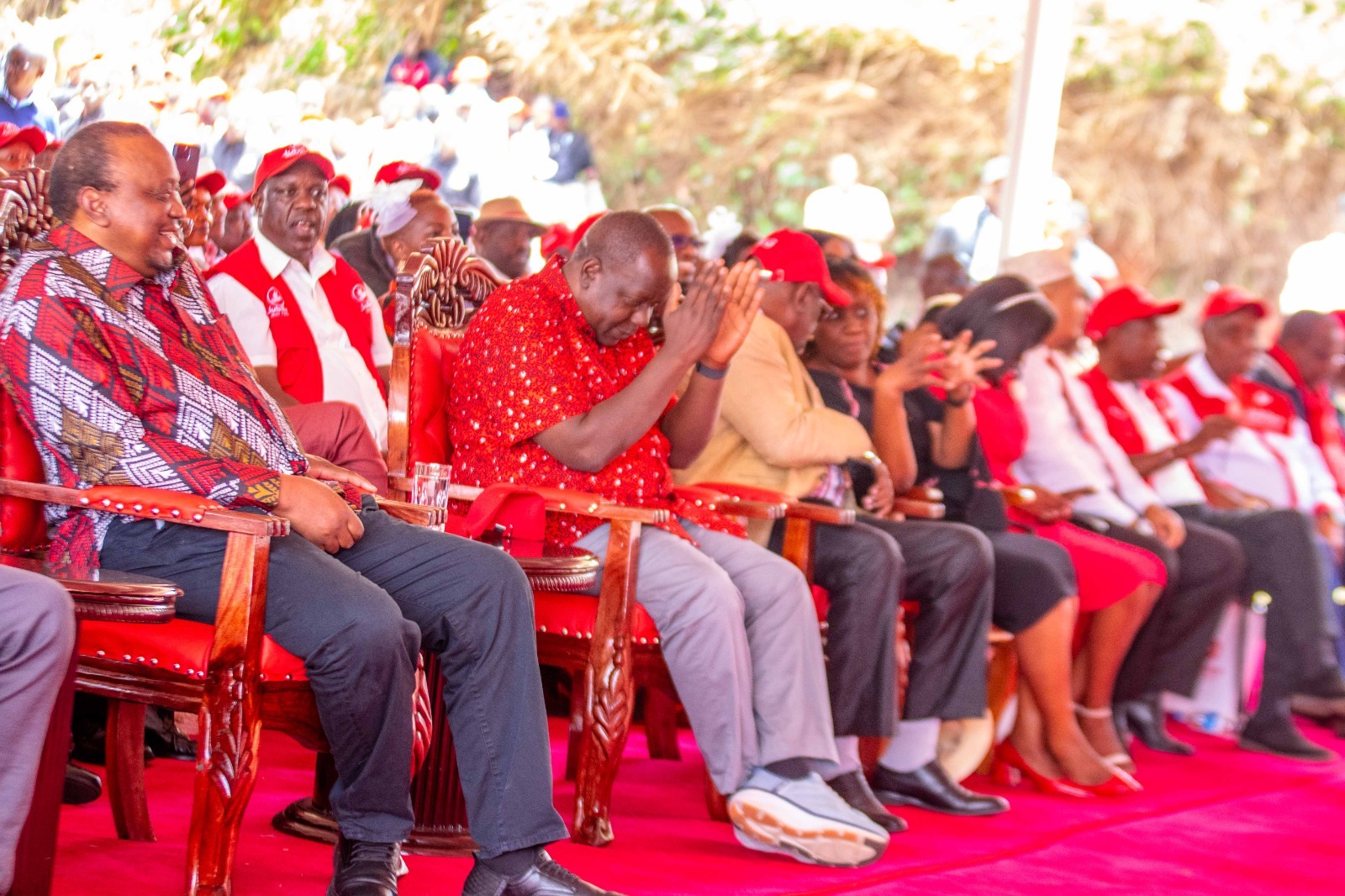
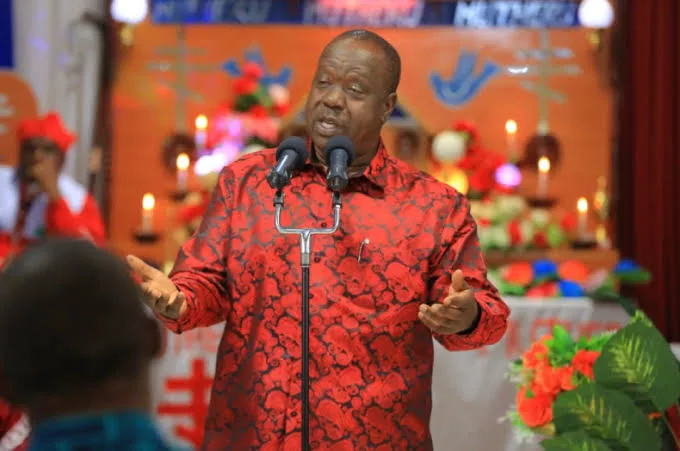
Fred Matiang’i has condemned the disruption of a service at Jesus Is Alive Ministries in Nairobi, saying churches should be able to hold services without intimidation.
The former Interior Cabinet Secretary was attending Bishop Margaret Wanjiru’s church on Sunday, 11 October, when heckling broke out, according to The Star’s account of the gathering.
Matiang’i linked the incident to failures of political leadership and alleged that some Nairobi leaders had engineered the disruption. That allegation has not been independently established by Political Headache, and the report does not identify evidence proving who organised it.
His central demand was that political disagreements should not obstruct worship. He also called on leaders to uphold order at public gatherings.
The incident brings the conduct of politicians and their supporters in places of worship into focus. Establishing who was responsible would require evidence beyond competing political statements.
Political Headache analysis: a church service is not a campaign rally
The immediate issue is the interruption of worship. Political visitors may attract attention, but the congregation includes people who came for a service rather than a contest between rival camps. An account centred only on which politician appeared stronger would miss that distinction.
There are two separate questions to establish. What happened inside the church, and who, if anyone, organised it? A recording might demonstrate that a speaker was interrupted. It would not necessarily establish who brought the people involved, what instructions they received or whether the disruption was coordinated.
That distinction matters because accusations can travel further than the evidence behind them. A clip showing hostile chanting can be authentic while a caption claiming a particular organiser remains unproved. The same standard should apply regardless of whether the politician under pressure is in government or opposition.
What a fuller account would establish
The church leadership is an important source because it can explain the programme, the invitations and the sequence of events. Its account would be more useful if it distinguished what officials personally witnessed from what they heard afterwards. Worshippers' accounts could add detail, especially when compared with an uninterrupted recording.
The timing also matters. Did the disruption begin during prayer, an introduction or a political address? Was it confined to a few people, or did it affect the wider congregation? Those details can help explain the incident without turning assumptions about motive into reported fact.
Any response from leaders accused of involvement should be presented alongside the allegation. A denial would not automatically resolve the dispute, just as the initial accusation would not settle it. The strongest account would show readers the evidence available and identify what remains contested.
The responsibility of political guests
A useful standard for politicians attending worship is whether their presence protects the purpose of the gathering. That includes their own language, the behaviour they encourage among supporters and their response when tensions rise. Appeals for calm are easier to assess when considered alongside conduct before and after the incident.
Church leaders also face a practical choice about the space given to political speeches. Clear arrangements on who speaks, for how long and on what subject can reduce uncertainty. Those are organisational options, not a claim that a particular arrangement was in place at this service or that its absence caused the disruption.
The controversy should therefore lead to more than competing demands for apologies. If organisers identify a failure in access, stewarding or the programme, they can explain how it will be addressed at future services. If there is evidence of deliberate intimidation, that evidence deserves examination through an accountable process.
What would change the story
A fuller church statement, a verified continuous recording or findings from an investigation could materially improve understanding of the incident. Further political accusations without supporting evidence would add positions to the dispute, but would not establish responsibility.
For now, the defensible conclusion is limited: Matiang’i has condemned disruption and called for respect for worship. The identity and motives of any organisers remain a separate evidential question. Keeping those two points distinct protects the congregation's experience from being reduced to another campaign talking point.
The same care should guide social coverage: a short clip should preserve the sequence and context necessary to understand what it actually shows.
Photo details
WHAT TO WATCH NEXT
- Whether church leaders provide an account of how the disruption began.
- Whether any investigation identifies those responsible.