
The easiest moment in a campaign is the sentence that receives applause. A candidate promises to remove a charge people dislike, restore money they want back or replace a programme they distrust. The difficult moment comes afterward, when someone asks who will be paid, who will keep paying and what happens to commitments already made. That second conversation deserves as much attention as the first. It is where a political promise begins to acquire a practical meaning.
Justina Wamae’s declaration of a presidential bid offers an opportunity to have that conversation early. Citizen Digital reported that, at the launch of Imarisha Uchumi Party on 25 October, she pledged to abolish the Affordable Housing Levy. The same report described her proposals for willing buyers to continue through mortgages and for contributors who wanted to stop to receive refunds. These are campaign positions, not implemented measures. They should be examined as proposals that require a detailed route from the present system to the promised one.
There is nothing unreasonable about asking a candidate to explain that route. A voter can dislike a levy and still want to know whether the proposed replacement is workable. Another voter can support the housing programme and still recognise that its financing deserves scrutiny. The debate should leave room for both positions. Treating every question as hostility to a candidate, or every criticism as hostility to housing, makes it harder to discuss the actual choices people face.
The first question is about the people covered by the promise. Who would be eligible for a refund, and which payments would count? Would the proposal distinguish people who have obtained a housing benefit from those who have not? How would records be checked, and what would happen where an employer or another intermediary had failed to supply complete information? These are questions for the proposed policy. They are not conclusions about current entitlements, and they should not be answered casually from a campaign platform.
The second question is about the money. A refund promise needs an estimate of the amount required, the assumptions behind it and the proposed source of funding. If the money would come from the budget, what would receive less funding or what additional revenue would be raised? If repayment would be spread over time, what determines the order? A promise can still be ambitious after those trade-offs are disclosed. What it cannot honestly remain is costless.
Then there are commitments already associated with the programme. A change of policy does not make a construction site, an existing agreement or an occupied home vanish. The proposal should distinguish projects that would continue, projects that would be reviewed and commitments that would need to be resolved through lawful processes. It should explain who would make those decisions and on what evidence. This is a planning requirement, not a claim that every existing commitment is sound or beyond challenge.
The mortgage proposal raises another set of practical questions. Which households would be able to qualify, what terms would be available and who would bear the risk if repayments failed? A mechanism that works for a household with stable earnings may not work for one whose income changes from month to month. The campaign should show the range of households it has considered. A single attractive example cannot demonstrate that a financing model serves everybody it is meant to help.
This is why a proper transition document should include worked examples. Consider a contributor who has paid but has not applied for a unit, a household already occupying one, and a buyer partway through an agreed payment arrangement. The document should explain the proposed treatment of each. The examples should be clearly hypothetical, with the assumptions shown. They would allow voters to understand the policy without implying that any individual has already acquired a right to a particular outcome.
The legal route also needs to be identified. Candidates should distinguish what they would ask Parliament to change from what they believe can be done administratively. They should seek competent legal scrutiny and publish the essential reasoning in accessible terms. A presidential declaration cannot substitute for the institutions and procedures required to change a programme. Explaining that limitation is a sign of seriousness. It prevents supporters from expecting a result that the officeholder could not simply deliver alone on the first day.
None of this means a new party must arrive with a completed government manual. Campaigns develop their policies, receive criticism and revise them. A credible party can say that some questions remain open, publish a timetable for answering them and invite specific proposals. That is better than presenting uncertainty as certainty. The important test is whether the party responds to questions with evidence and choices, rather than treating the demand for detail as an attempt to silence it.
The same standard should apply to established parties. Incumbency does not turn a policy into proof of success, and experience does not remove the duty to explain costs. Government supporters should be prepared to show what the current arrangement has delivered and what remains unresolved. Opponents should show how their alternative would improve the position. A fair debate compares workable options. It does not compare the incumbent’s difficult reality with an opposition proposal from which every difficult decision has been removed.
Wamae’s launch also included an emphasis on agriculture and opportunities for young people, according to The Star. Those themes will be familiar to voters, but familiarity should not be a reason to dismiss them. The useful question is what the party proposes to do differently and how it would know whether its interventions were working. A broad priority becomes more persuasive when it identifies the people affected, the institution responsible and the evidence that would count as success.
Policy priorities also compete with one another. A party proposing refunds, more support for agriculture and expanded youth programmes should explain how the package fits together. The cost of each item matters, but so does the total. A manifesto that presents every proposal separately can hide the pressure created when all are promised at once. The public deserves an account of sequencing: what would happen first, what would depend on additional resources and what might have to wait.
Journalists can make that conversation more useful. Instead of asking only whether a promise will attract votes, they can ask for the policy paper, the assumptions and the response to a difficult example. They can distinguish a proposal that has been costed from one still being developed. They can return to the same questions after the launch. The purpose is not to turn every interview into an ambush. It is to make the competition over ideas as visible as the competition over personalities.
Voters have a role in setting that expectation. It is possible to appreciate a candidate’s courage or independence while asking for more detail. Support should not require defending every unfinished sentence as a complete policy. A movement becomes stronger when its members can question the design of its promises without being accused of betrayal. That is especially important for a new political organisation seeking to show that it offers a different relationship between leaders and supporters.
There is also a discipline in how proposals are reported online. A headline announcing an intention should not become a message telling people that a payment obligation has already changed. Campaign statements need dates, attribution and a clear distinction between a pledge and an operative decision. People should not make financial choices on the mistaken impression that a speech has altered their present circumstances. The responsibility for that clarity belongs to the campaign, the media and anyone republishing the claim.
The housing debate is too important to be reduced to a contest between those who can say abolish most loudly and those who can say development most confidently. Homes, public money and household budgets require a more exact discussion. The proposal should explain how a change would protect people already inside the system, treat contributors fairly and avoid creating another set of unresolved obligations. Its supporters should be able to point to that explanation when challenged.
Wamae has put a clear position into the campaign. The next step is to turn it into a document that can withstand ordinary questions. Who is covered? What would it cost? What law would change? What happens to existing commitments? What would be delivered first? A candidate who answers those questions gives voters more than a slogan to support or reject. She gives them a policy they can examine, and a record against which they can later judge her.
ABOUT THE WRITER
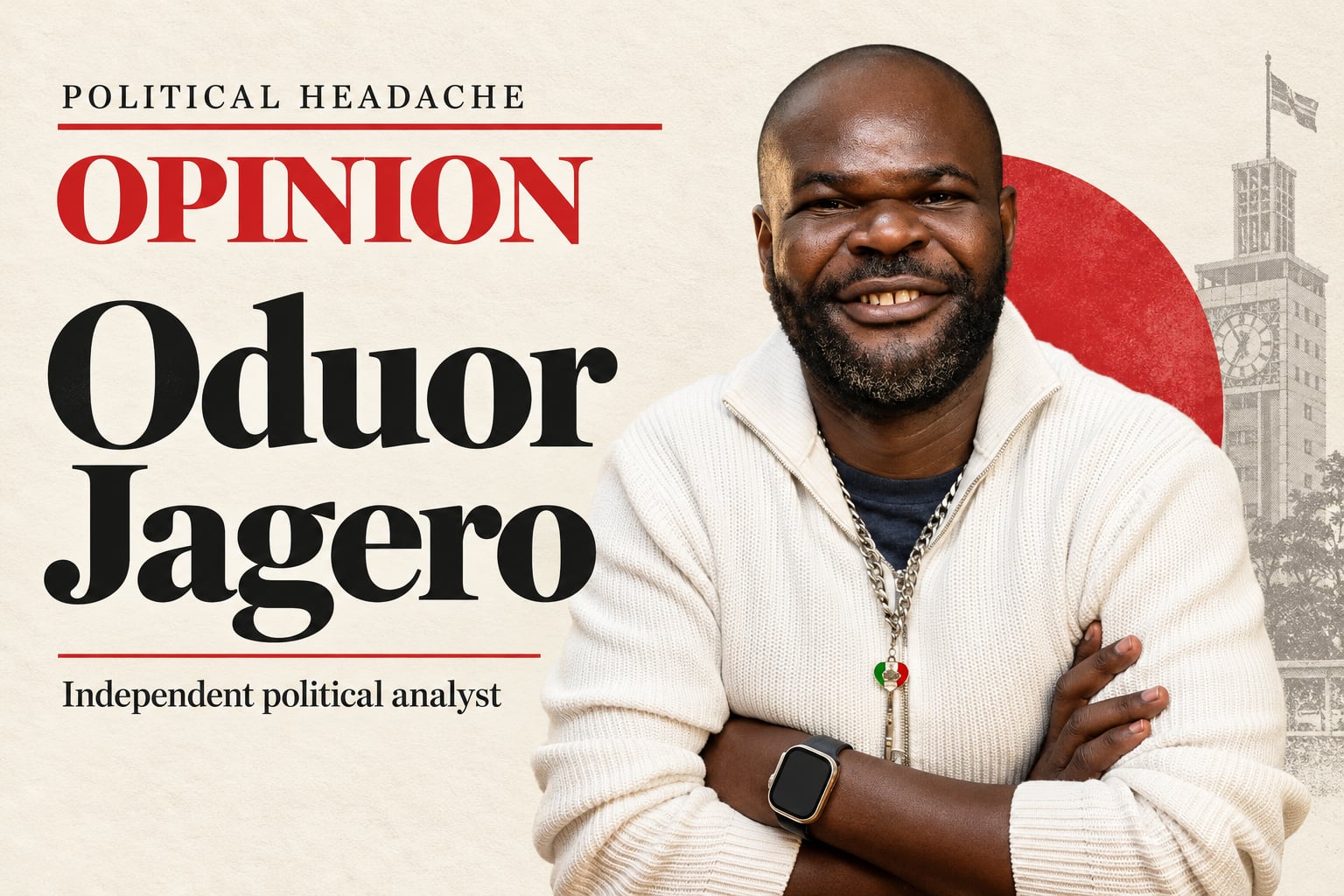
Oduor Jagero
Oduor Jagero is a Political Headache host, writer and political conversationalist. He examines power and public policy without party allegiance.
Read more by Oduor Jagero →