
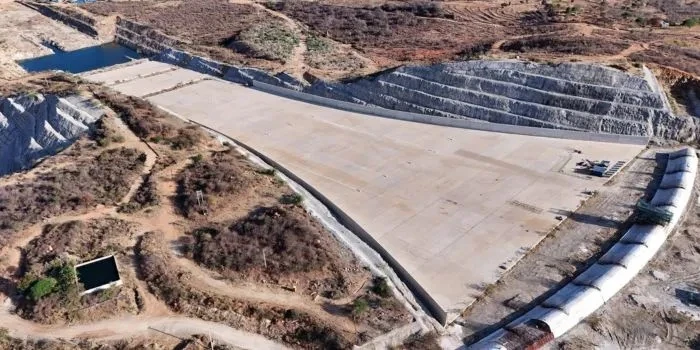
The African Development Bank and Kenyan officials have identified financing conditions, contractor mobilisation and outstanding social safeguards as priorities for completing Thwake Dam, as the government targets January 2027 to begin storing water. The latest lender update shows that approaching the end of construction still involves financial and community obligations as well as engineering work.
In its 21 October update, AfDB describes a joint mission undertaken from 21 to 25 September with the National Treasury and the Water Ministry. Discussions included conditions for the first disbursement of additional financing and grievances from homeowners affected by nearby construction.
Water Secretary Samuel Alima told the mission that the contractor resumed work in August and that January is the government's impounding target. The update also records a concept note for financing downstream water, sanitation, irrigation and hydropower components. These are important distinctions: storing water, completing the dam and delivering each downstream service are separate milestones.
Additional financing has a defined purpose
AfDB's 12 June financing announcement records board approval on 22 May of €68.39 million in additional financing for Phase I. It describes work including changes to the dam height, foundation strengthening and two supplementary saddle dams. Kenya's counterpart contribution was listed separately at €15 million.
The same announcement sets out the programme's intended scale: water supply of up to 150,000 cubic metres a day for about 1.3 million people, irrigation over 40,000 hectares and 20 megawatts of hydropower. These are design benefits, not a statement that those services are already being delivered. The June document gave September 2028 as its expected project-completion date.
That date and the more recent January 2027 impounding target should not be collapsed into a single deadline. The documents refer to different stages and were issued at different times. They do not establish that every financed activity, distribution connection and generating component will be operational when water first begins accumulating behind the dam.
Government has described an earlier storage milestone
A Kenya News Agency report of 9 October records Water and Sanitation Principal Secretary Julius Korir's visit to the project in Mavindini, Kathozweni. He said cash-flow difficulties had led the government to seek further support from its development partner and expressed confidence that construction could advance with the additional resources.
Korir identified the end of January as the target for closing the gates to begin filling the dam. He also expressed hope for a commissioning event in April, with water visibly stored. These were targets stated during the visit, not independently certified dates of completion. The report separately records his emphasis on ensuring that stored water eventually reaches homes.
The distinction is practical for communities expecting services. An impounded reservoir is a source of water; household supply requires the relevant treatment and distribution infrastructure. Irrigation and electricity generation require their own facilities and operating arrangements. A progress announcement about one component cannot demonstrate that all the others are ready.
Financing approval and payment are different stages
The September mission's focus on disbursement conditions helps explain why an approved financing package is not the same as money already spent on site. A lender's approval establishes a commitment under specified terms. Disbursement, contractor certification and payment are further steps that have to be completed within that framework.
For public reporting, the useful evidence will therefore include more than the headline value of the financing. Dated confirmation of funds released, work certified and milestones achieved would show how the financial commitment is translating into construction progress. The reviewed announcements do not provide a complete payment ledger, and this report does not present one.
The project sits at the meeting of the Athi and Thwake rivers on the Makueni–Kitui border. Its intended water, agricultural and energy benefits give it importance beyond the construction site. They also make the sequence of delivery important: communities need to know which service a milestone concerns and which further works are required before it becomes usable.
Community obligations remain part of completion
The lender's update identifies affected homes and outstanding environmental, health and social matters among the work still requiring attention. That supports reporting that grievances remain an implementation issue. It does not supply a verified percentage of all compensation claims paid, or a final register of unresolved cases, and no such percentage is asserted here.
A compensation announcement and a completed payment are different records. To establish the status of an individual claim would require the relevant assessment, decision and payment evidence. The broad project update cannot settle every household's circumstances, and the construction timetable should not be treated as a substitute for that process.
The published targets also require dated follow-up. A construction estimate issued in June cannot serve as a current inspection record in October. Likewise, the September mission's findings describe what the team examined then; confirmation of subsequent progress should identify the later assessment and the particular component it covers.
The next clear test is the government's January impounding target, followed by evidence about the remaining works and downstream services. AfDB's published record provides a firmer basis for following those stages than treating the project as either wholly finished or wholly stalled. The current position is continued construction with specified financing and safeguard tasks still to be completed.
Photo details
WHAT TO WATCH NEXT
- Dated confirmation of disbursement, construction progress and safeguard action.
- Progress against the January 2027 impounding target.