
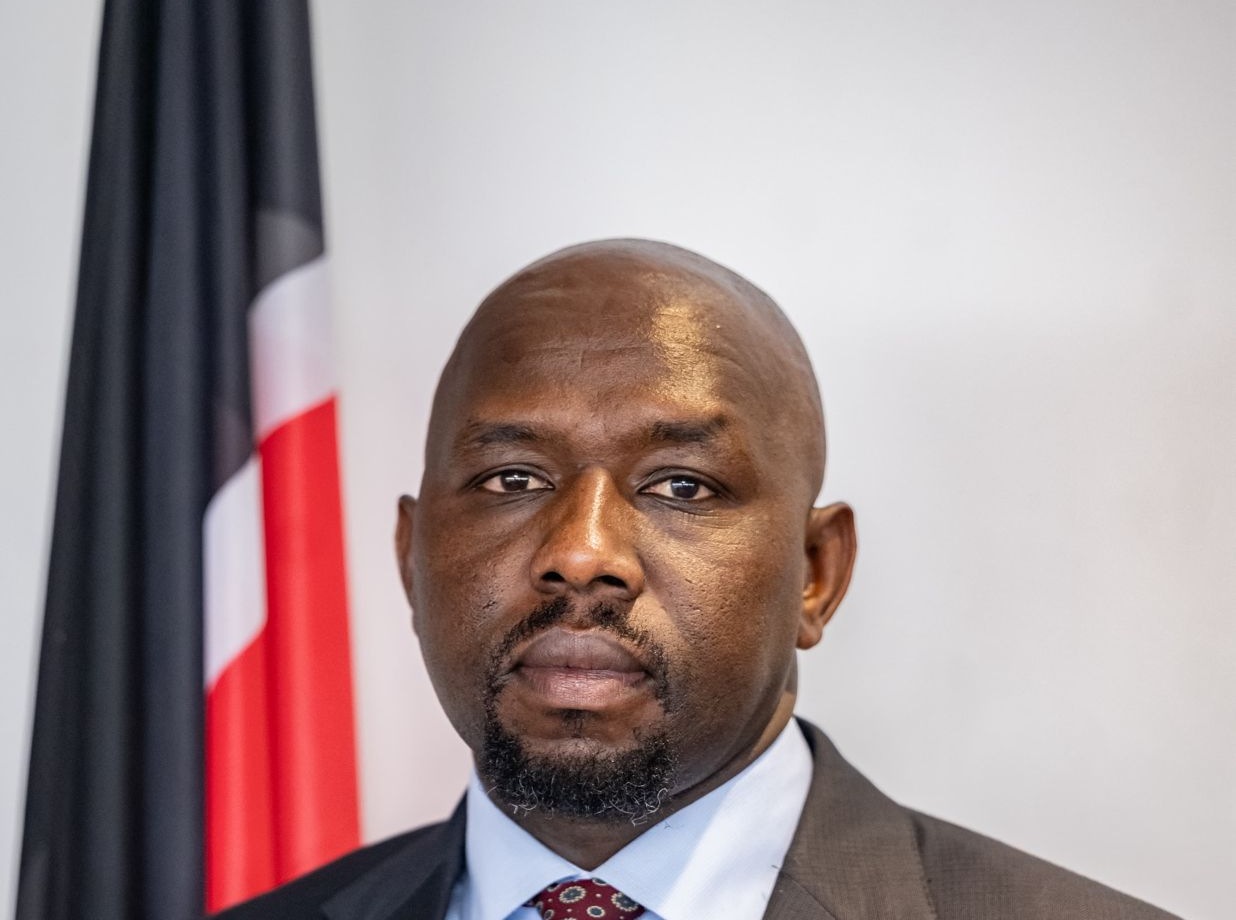
Interior Cabinet Secretary Kipchumba Murkomen has said Kenyans should not face discrimination when seeking identity documents and voter registration, including citizens living outside the country. His remarks put a practical issue behind the election debate: whether people can access the documents and services needed to exercise their rights.
KBC reported on 1 October that Murkomen spoke in Kiminini during a development, security and service-delivery tour of Trans Nzoia. He defended the inclusion of Kenyans in neighbouring countries and urged residents to use registration services.
The statement is a political and administrative commitment. It is not, on its own, a new IEBC registration calendar or a change to the rules governing where citizens abroad can vote. Those details require separate confirmation from the institution responsible for running elections.
Identity documents and the voter register do different jobs
An identity document helps establish who a person is. Entry in the voter register establishes that the person has completed the relevant electoral registration process. Possessing an ID should not be confused with having checked that one’s name and polling details appear correctly in the register.
The IEBC’s voter-registration guidance explains that registration involves presenting oneself to the registration officer and that voters can inspect their registration information through the Commission’s arrangements. The guidance is useful background; a specific exercise’s opening dates and locations should always be checked against current official notices.
This separation gives citizens a clearer way to identify a problem. A delay in obtaining an identity document is not the same complaint as an error in a voter-registration record. Keeping track of the office, application date and reference associated with each process makes a follow-up more precise.
It also makes official reporting more meaningful. The number of IDs issued cannot simply be presented as the number of newly registered voters. Each measure describes a different service and needs its own source, period and explanation.
Diaspora participation has its own arrangements
The question of citizens abroad is not new. A 2015 Supreme Court decision concerning diaspora voting considered the machinery needed to make participation possible and the progressive realisation of those rights. That judgment provides constitutional history; it does not supply the operational schedule for the next election.
IEBC’s notice for the 2022 diaspora registration exercise specified registration at designated Kenyan missions and explained the presidential-election scope of that exercise. It should be read as a record of 2022, not circulated as a current instruction to travel to a mission in 2026.
For the coming election, citizens need the current list of authorised centres, acceptable documents, service dates and the categories of election covered. A general promise of inclusion does not answer those questions. Publishing the details clearly is part of making access real rather than merely declaring it.
A citizen should therefore verify arrangements through IEBC and the relevant official mission before making a journey. Social-media cards that omit the year can make an expired notice look current, particularly when the underlying registration advice sounds familiar.
What equal access should look like in practice
The service-delivery test is whether similarly situated applicants receive consistent information, clear requirements and a usable route for resolving difficulties. An assurance from a Cabinet Secretary becomes measurable when offices can explain processing stages and the reasons for delays or refusals.
Information needs to be understandable before a person joins a queue. Applicants should be able to find which office handles the request, what documents are required and where a complaint can be directed. Where additional checks are necessary, the office should explain the relevant procedure rather than leave people to rely on rumours.
Those are practical standards for assessing the pledge, not findings that every office currently meets or breaches them. Evidence about performance would require service records, properly documented complaints and responses from the institutions concerned.
The same care applies to political accusations. Claims that an entire community has been favoured or excluded need verifiable evidence. A speech defending registration does not, by itself, prove that an opposing politician has obstructed it or that a particular registration office has discriminated.
The local development tour is a separate strand
KBC’s account also describes Murkomen inspecting work on the Kiminini modern market, a road and school classrooms. The market was described as a planned 500-stall facility with services intended to support traders. Inspection of construction should not be reported as completion or proof that all promised facilities are operating.
These local projects belong to the wider service-delivery context of the visit. They do not change the institutional responsibility for voter registration. Keeping the strands separate allows residents to follow both the construction commitments and the identity-service pledge without confusing their measures of progress.
Political Headache’s county-politics coverage examines how national announcements intersect with local services. In Trans Nzoia, useful follow-up would identify what residents can now access, what is still under construction and which office is responsible for each outstanding commitment.
What to watch next
The next substantive development would be a clear operational notice or evidence of improved access, rather than repetition of the assurance. For electoral services, that means current IEBC instructions. For identity documents, it means the responsible registration service explaining requirements, processing and complaint handling.
Murkomen’s remarks establish the position he says the government will uphold. The public can assess that position more effectively when official information separates identity issuance from voter registration and distinguishes domestic arrangements from those abroad. Clear, current instructions are the bridge between a statement of equal treatment and a service citizens can actually use.
Photo details
WHAT TO WATCH NEXT
- Murkomen said identity-document access should not discriminate against Kenyans.
- An identity document and entry in the voter register remain distinct processes.