
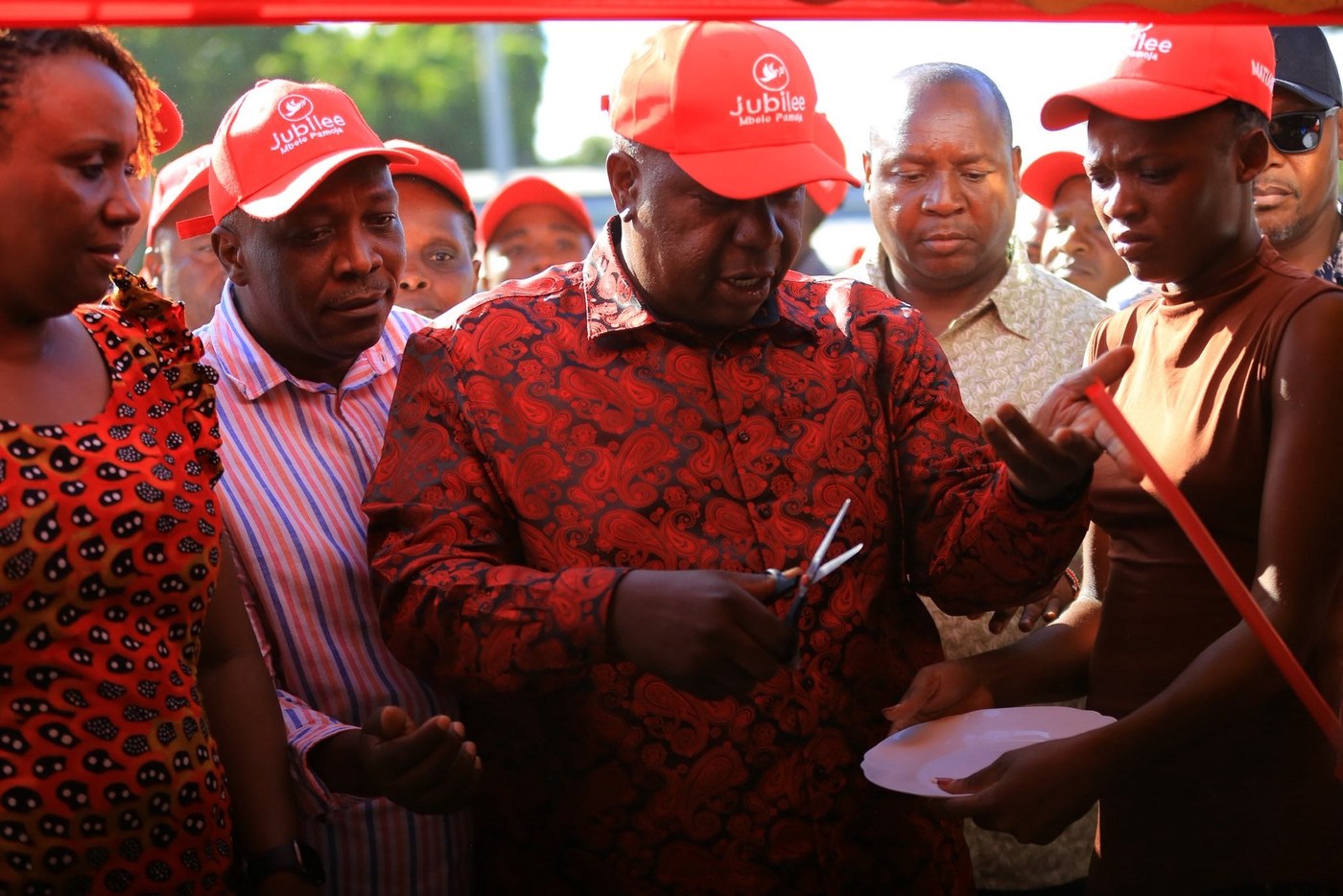
Fred Matiang’i and Ndindi Nyoro’s joint political appearances are offering a visible example of cooperation across opposition parties, even as the terms of a wider electoral and governing arrangement remain unsettled.
People Daily reported that the Jubilee and People’s Party of Kenya leaders attended a church service in Olerai, Narok, on September 27 ahead of a planned public engagement in town. The report also traced earlier joint appearances in Murang’a. These are documented past engagements, rather than evidence of a fresh joint rally on October 13.
The unresolved negotiations are nevertheless current. The Star reported on October 13 that Matiang’i, speaking in a radio interview, said opposition discussions about a coalition government were continuing without an agreement. His comments concerned the difficulty of negotiating how to govern together, as well as the wider task of electoral cooperation.
The two strands of evidence should be read together. Joint appearances establish that leaders are willing to share a platform. They do not establish that their parties have merged, selected a presidential ticket or agreed how a future administration would operate.
Their significance lies in what audiences can observe: political figures from different organisations presenting themselves in the same public space. That can make cooperation more tangible than a declaration issued after a private meeting. It still leaves unanswered whether the relationship will extend to candidate selection, a policy programme or coordinated activity across constituencies.
For opposition parties, the difference between campaigning together and governing together is consequential. A campaign can unite around criticism of an incumbent while postponing disagreements about priorities. Government requires decisions about resources, responsibilities and competing promises. Matiang’i’s reported remarks bring that second set of questions into the public discussion.
Nor does unresolved negotiation necessarily prove that cooperation has failed. It indicates that an agreement cannot yet be treated as a fact. Equally, repeated appearances should not be used as a substitute for the terms of a deal. Both claims would ask the available evidence to carry more than it can support.
Political Headache has already covered the announcement of the Narok appearance. The wider question now is what this continuing cooperation means for the opposition’s organisational choices. A jointly confirmed arrangement would provide firmer evidence than another shared platform; a published programme would clarify what its participants intend to offer voters.
Matiang’i and Nyoro’s public contact is therefore a development to follow on its own terms. It shows a relationship in practice, while the larger coalition question remains open. Its electoral significance will depend on the decisions that follow, rather than the number of appearances alone.
Photo details
WHAT TO WATCH NEXT
- Follow formal decisions and implementation against the commitments described.
- Distinguish proposals and attributed claims from completed actions.