
Kenya’s debt debate needs a demand that is both morally serious and capable of producing results: open the records, examine each obligation and establish what remedies the evidence can support. Calling every unpopular loan “odious” may express understandable anger. It does not tell citizens which agreement can be challenged, against whom, in which forum or at what cost.
An audit should make those questions answerable. Its purpose should be to separate legitimate borrowing from bad decisions, unlawful conduct and obligations whose enforceability deserves specialist examination. Those categories can overlap, but they are not interchangeable. The distinction is essential if public pressure is to produce accountability rather than another round of promises that dissolve when lawyers open the contracts.
The idea of odious debt asks a powerful question: why should a population carry obligations incurred against its interests? The legal answer is more difficult than the moral intuition. The Dilemma of Odious Debts, published by Buchheit, Gulati and Thompson, examines that tension and the possible relevance of existing domestic-law defences. It is scholarly analysis, not a judgment cancelling Kenya’s debts or a universal exemption from repayment.
That should encourage better preparation, not resignation. A government cannot answer every request for documents by warning that scrutiny will frighten lenders. Nor can the opposition responsibly promise that a change of administration will erase obligations simply because the borrowing occurred under its opponents. Citizens deserve a case built on records, with its strengths and limitations exposed.
The word “odious” must not become a shortcut around evidence.
Start with the agreement
Every serious review should begin with the actual instrument. Who borrowed? Who lent? What amount was committed, and what amount was disbursed? What purpose was recorded? What law governs the agreement, and what process applies to a dispute? Were guarantees or other commitments attached? A headline debt total cannot answer these questions, and a political speech cannot substitute for the documents.
The reviewer then needs the chain of authority. Which institutions approved the transaction, under which powers and on what dates? Were the relevant procedures followed? Where an approval is missing, that must be investigated rather than quietly assumed. Equally, an incomplete file available to the public should not immediately be described as proof that an approval never existed. The institution holding it should be required to account for the gap.
The audit should follow the money beyond the initial receipt. Disbursement into an account, transfer to an implementing body and payment for goods or services are separate events. They should be reconciled using records that can be checked. Where funds supported general budget financing, the review must explain how it has traced and assessed that use, rather than invent a neat project link that the financing arrangement does not contain.
This is painstaking work. It needs accountants, lawyers, procurement specialists and people capable of assessing the underlying project. It also needs a clear public vocabulary. “Unsupported expenditure”, “poor value” and “suspected diversion” describe different findings. A report that merges them into one accusation risks weakening the strongest cases while making innocent errors look like established crimes.
A failed project is a question, not a verdict
Consider a hypothetical loan for a water project that fails to provide reliable supply. The failure might reflect a poor feasibility study, defective construction, diverted funds, a drought assumption that proved wrong or a combination of problems. Each explanation points towards different responsibility. None should be selected merely because it fits the political identity of the people who approved the project.
The audit would need to establish what was promised, what was delivered and what caused the gap. If a contractor was paid for work not done, recovery and enforcement questions arise. If public officials approved an unrealistic project despite warnings, the decision process deserves examination. If the lender knew of a prohibited purpose or participated in wrongdoing, that evidence may raise separate legal issues. The loan agreement still has to be analysed.
This is why the word “odious” must not become a shortcut around evidence. The identity of a disliked government, the existence of hardship or the disappointing performance of a project does not by itself settle a creditor’s rights. A serious challenge needs the relevant facts connected to a legal argument that can survive an opponent’s response.
The reverse is equally important. Formal paperwork does not automatically establish that public money served the public. A transaction can have signatures and still warrant investigation into procurement, conflicts of interest or the destination of payments. An audit should test both compliance and substance, without presenting a technical review as a criminal conviction.
Build on work already done
Kenya is not starting from an empty shelf. The Auditor-General’s public debt collection lists examinations of domestic debt, commercial loans, Eurobond proceeds, debt servicing and the contracting of external loans. Their existence matters. A new process should identify what those reports have already examined, what recommendations remain unresolved and where additional work is necessary.
That is different from claiming that the listed reports collectively prove a particular debt is odious. They do not become a verdict merely by being grouped together. Each finding must be read in its own context, including the period covered, the evidence available and management’s response. A public inventory of findings and follow-up actions would be more useful than asking citizens to choose between blanket reassurance and blanket condemnation.
The review should also avoid institutional duplication. A new committee with a grand title can consume time while the same missing records remain missing. Where existing institutions have the mandate and expertise, they should receive the resources and cooperation required to complete their work. Where an independent specialist review is necessary, its remit should explain the gap it is filling.
Appointments matter, but access matters more. Even a respected panel cannot produce a credible result if it is denied agreements, account records and correspondence. Its terms should identify the records required, the route for resolving non-cooperation and the reporting timetable. Any lawful confidentiality restriction should be explained narrowly, with a public summary wherever possible.
Protect the audit from its sponsors
An opposition-backed demand for scrutiny must include loans associated with opposition figures when they held office. A government-backed process must include the current administration’s decisions. The moment an audit begins with a list of political friends whose transactions cannot be examined, it has lost the principle that justified it.
That standard is especially important for those of us arguing for a stronger challenge to the debt settlement Kenya has inherited. Public frustration gives the argument energy, but frustration cannot do the evidential work. A case that survives scrutiny is more valuable than a dramatic accusation that collapses when the first document is produced. Political independence in the process protects the public demand itself.
People named adversely should have a meaningful opportunity to respond. The final report should distinguish their explanations from the auditors’ conclusions and identify unresolved factual disputes. This does not mean allowing powerful actors to delay publication indefinitely. It means establishing a fair deadline and a transparent process so that the report can be judged on its reasoning.
Public participation should be practical too. Citizens and professionals should be able to submit documents, flag abandoned projects and ask questions about specific transactions. The review should protect sensitive personal information and avoid publishing unsupported allegations as if they were findings. A public audit is not a public invitation to abandon standards of proof.
Publish findings that lead somewhere
The final output should be a transaction register with clear categories: records complete or incomplete; compliance questions resolved or outstanding; expenditure reconciled or disputed; remedies recommended or still under legal review. Where the evidence supports no adverse finding, that should be said. Where it supports urgent action, the responsible institution and next step should be named.
A separate implementation table should track referrals, recovery proceedings, contract changes and policy reforms. It should not promise that every recommendation will lead to cancellation. Some findings may justify prosecution or recovery from a contractor while leaving a sovereign repayment obligation intact. Other findings may support negotiation or a legal challenge. The public deserves to understand those differences before expectations harden into another disappointment.
Debt scrutiny and economic responsibility belong together. People facing pressure on household budgets should not be offered a comforting claim that all consequences disappear once a debt is denounced. They should be offered a credible route to uncovering wrongdoing, recovering value and preventing repetition. That requires courage from politicians, discipline from investigators and candour from specialists about what the evidence can establish.
The process should preserve the distinction between an unanswered question and an adverse conclusion. A missing document should trigger a recorded request, a deadline and an explanation of the consequence for the review. It should not disappear into a footnote, but neither should it automatically become a declaration of fraud. That discipline will matter when political pressure is greatest. A finding that clearly states what is known, what is inferred and what remains unproven gives citizens a stronger basis for action than a report that hides its uncertainty.
Kenya should demand an audit ambitious enough to follow every serious question and careful enough to survive the answer. The test is not how loudly the process condemns borrowing. It is whether citizens finish it knowing what they owe, why they owe it, what went wrong and what can lawfully be done next.
ABOUT THE WRITER
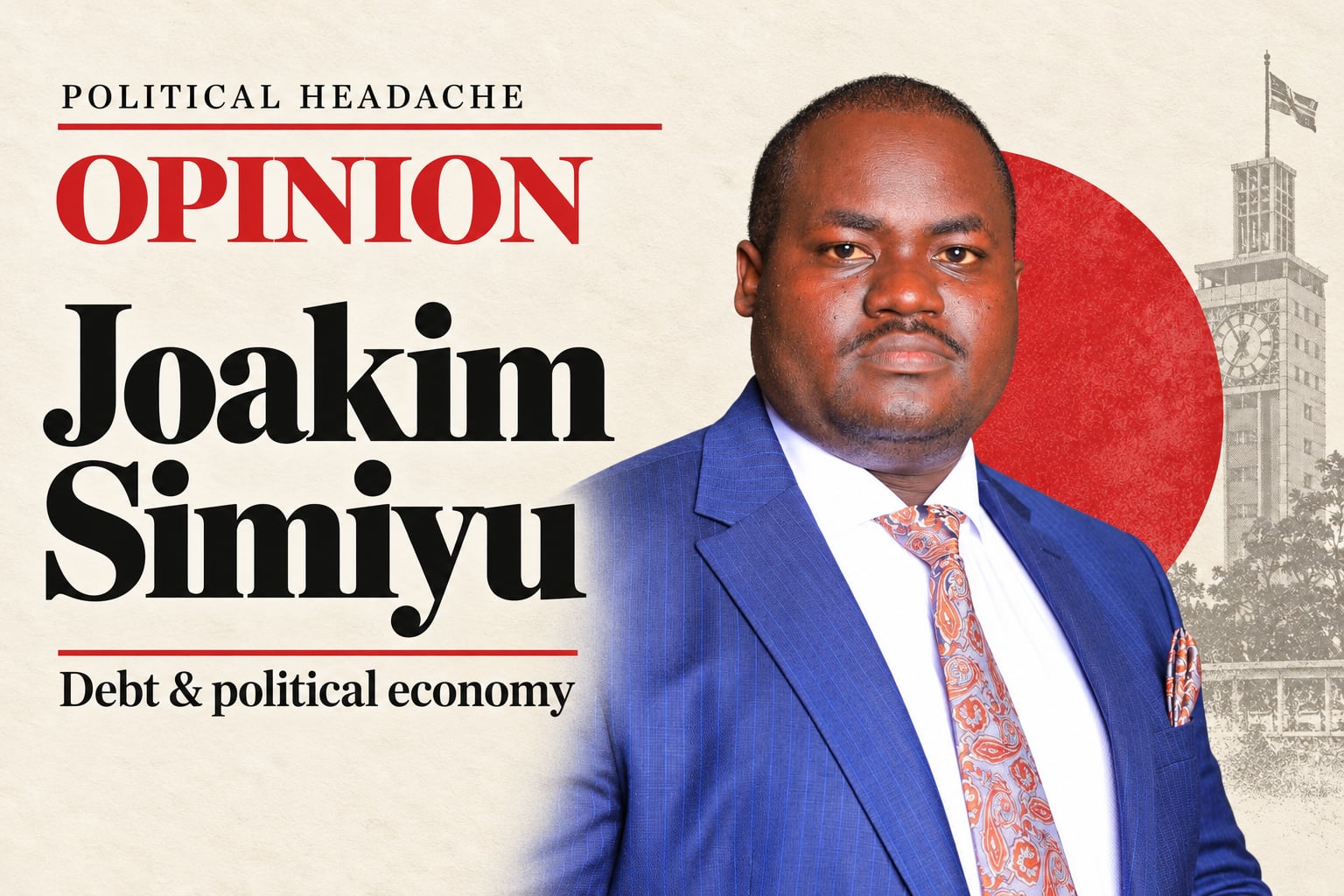
Joakim Simiyu
Joakim Simiyu specialises in odious debt and writes on public borrowing, accountability and political economy. His political outlook leans towards Safina.
Read more by Joakim Simiyu →