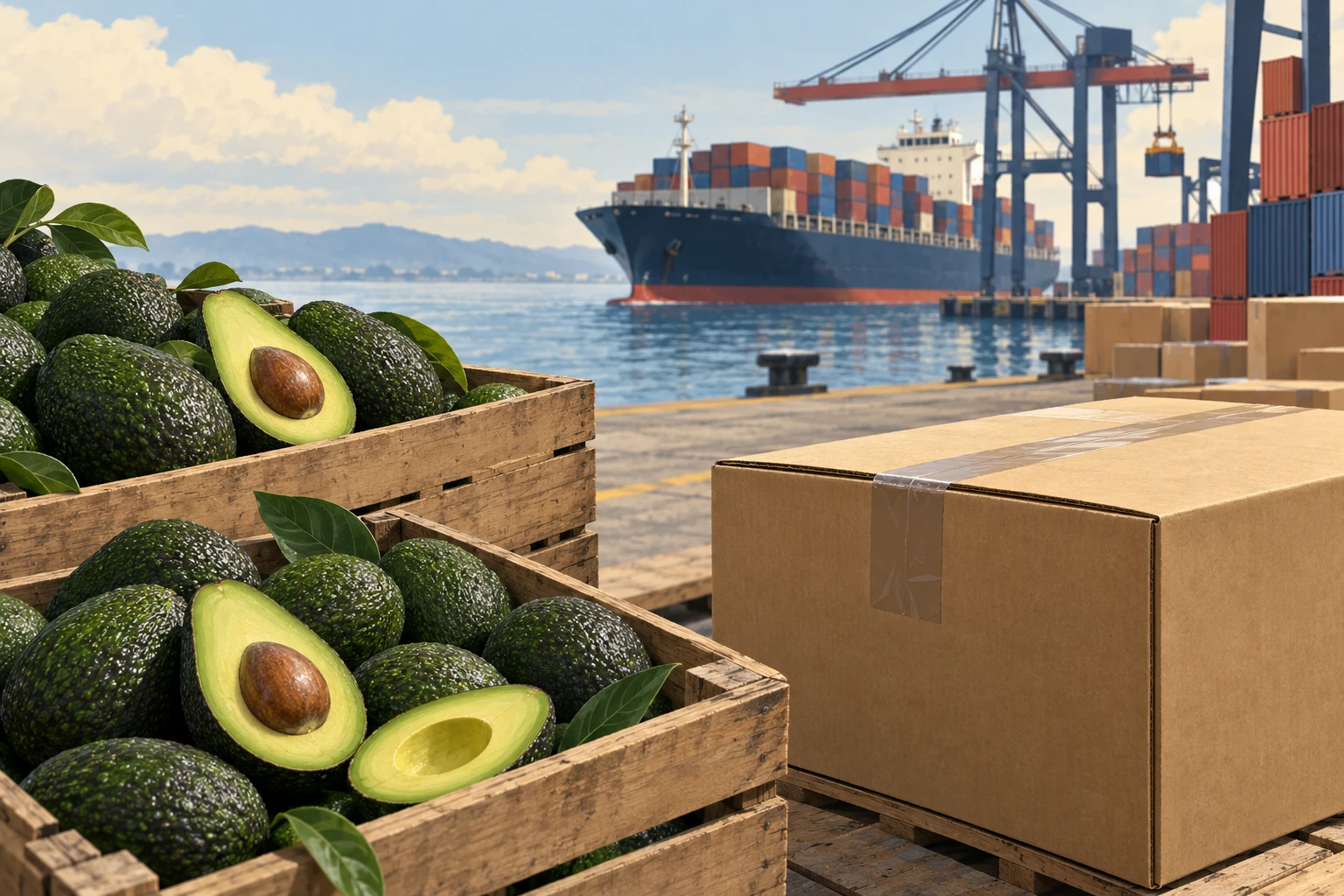
Kenyan and Chinese officials have used China’s national-day reception in Nairobi to highlight growing commercial ties and early export gains. The statements create an opportunity to examine a practical policy question: how a tariff concession becomes a sale, and how much of the benefit reaches Kenyan producers.
KBC’s report of the 30 September reception says Prime Cabinet Secretary Musalia Mudavadi described an Early Harvest Agreement signed in March and effective from May. Ambassador Guo Haiyan cited increases in exports including avocado oil and aquatic products.
These are officials’ accounts of the policy and its early results. Political Headache has not independently reconciled the reported product-level percentage increases against the underlying customs series. That limitation matters before drawing a conclusion about the size of the national benefit or attributing every increase to the tariff change.
The percentage needs a starting point
A growth rate is informative only when readers know what is being measured. Export value and physical volume are different measures. A rise in value can reflect a change in quantities, prices, product mix or exchange-rate conversion. The underlying series is needed to distinguish those possibilities.
The starting amount matters too. As a simple mathematical illustration, an increase from one unit to eight units is 700 per cent, while an increase from 100 to 150 units is 50 per cent. The first has the larger percentage; the second has the larger absolute increase. Neither example represents the Kenyan export figures.
Product definitions also need to match. Avocado oil and fresh avocados are different products, so an increase in one should not be reported as the same increase in the other. A careful comparison uses the same product category and comparable periods, rather than combining attractive percentages from separate datasets.
The useful next step is publication of the values, quantities, comparison period and source behind the reception’s figures. That would let readers assess the scale of the change and follow whether the early gains persist.
Zero tariff does not remove every market requirement
A tariff is one part of the cost and conditions of trade. Plant-health certification, product standards, handling and documentation remain distinct issues. The World Trade Organization’s explanation of sanitary and phytosanitary measures describes the rules governing food-safety and animal- and plant-health standards in international trade.
For Kenyan exporters, KEPHIS explains its phytosanitary role in checking exported plants and plant products against the importing country’s requirements. That helps explain why a duty concession should not be read as permission to send any agricultural consignment without the applicable checks.
KEPHIS’s May 2025 newsletter describes specific requirements associated with fresh-avocado access to China, including approved production and handling arrangements, labelling and certification. That is background to market access, not a newly announced protocol at the September reception.
Exporters therefore need to verify the current rules for their exact product and destination. A general statement about access is not a substitute for the relevant customs treatment and the health or technical requirements attached to a shipment.
The route from export growth to farm income
A national export total does not show how the proceeds are distributed. To assess benefits for producers, additional information is needed about purchase prices, costs, rejection rates and the terms under which suppliers are paid. A rise in shipments and a rise in a farmer’s net income are related possibilities, not identical facts.
The same applies to employment. More trade can create work in production, processing, transport and other services, but the number and quality of jobs require evidence. A diplomatic statement welcoming opportunities should not be converted into a verified count of newly employed people.
A useful local report would follow a defined product through its supply chain. It could identify which firms or producer groups are selling, how compliance costs are handled and what changes they can document. That would give the national figures a concrete meaning without assuming that every producer experiences the same result.
Trade cooperation and infrastructure commitments need separate records
The reception also covered wider development cooperation. KBC reports discussion of roads, railways and the relationship beyond Kenya’s Vision 2030 agenda. Those statements establish the subjects being promoted; they do not themselves establish the financing, contract terms or completion status of a particular project.
For an infrastructure commitment, readers should look for the responsible institution, the scope of work and the relevant approvals. For a trade concession, they need the applicable product coverage and customs rules. Each strand can contribute to the bilateral relationship while requiring different evidence to judge delivery.
Political Headache’s accountability reporting follows this distinction between announced opportunity and measurable outcome. In the trade discussion, the most useful evidence would connect official export figures with the experience of businesses and producers who are expected to benefit.
What to watch after the reception
The immediate claim is that the new trade arrangements are producing gains. The next test is whether consistent, accessible data supports that account and shows its scale. Product-level series, clear comparison periods and information on costs would make the discussion more useful than a collection of percentages alone.
The reception demonstrates political support for deeper ties. Assessing the economic result requires a further step: tracking actual trade, compliance and distribution of benefits. Keeping those questions visible allows room for real progress to be recognised without treating diplomatic optimism as a completed evaluation.
Photo details
WHAT TO WATCH NEXT
- Kenyan and Chinese officials promoted trade cooperation at a diplomatic reception.
- Tariff preferences do not remove product standards or verify claimed export growth.