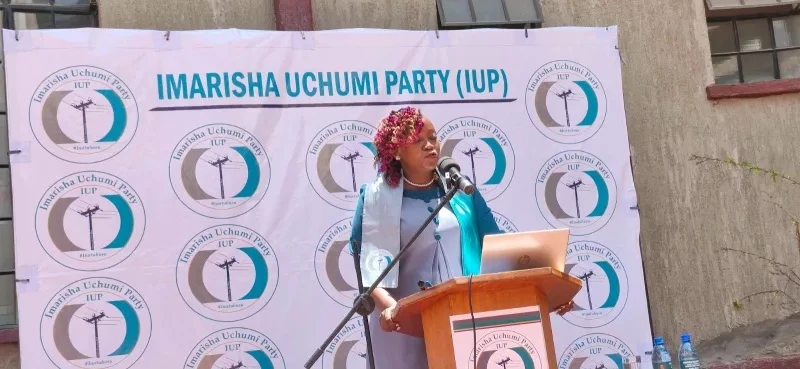
Justina Wamae has declared an intention to contest the presidency in 2027 through Imarisha Uchumi Party, presenting housing costs, agriculture and youth employment as central issues in her campaign. The announcement marks a move from her role as a presidential running mate in 2022 to seeking the top position herself.
Citizen Digital's account of the 25 October launch reports that Wamae wants the party to field candidates across elective positions. She also expressed openness to alliances where manifestos align. Those statements describe her intentions; they do not establish a completed nomination process or an agreed coalition.
The launch took place in Utawala, Nairobi, according to The Star's separate report. Its account places agricultural investment and youth opportunities at the centre of the party's economic message, including a pledge to extend the National Youth Service to all 290 constituencies.
Housing pledge confronts an existing revenue system
Wamae said she would abolish the Affordable Housing Levy if elected. Citizen reported her proposal to offer mortgages to people wishing to continue paying for the homes and reimburse contributors who wished to withdraw. These are campaign commitments, not changes that have taken effect in the collection system.
The Kenya Revenue Authority's public notice on the levy identifies the Affordable Housing Act, 2024 as the collection framework. It sets out a 1.5 per cent deduction from an employee's gross monthly salary and a matching 1.5 per cent employer contribution. It also describes obligations for other income earners covered by the law.
The distinction matters to anyone interpreting the announcement as an immediate entitlement to stop deductions or obtain a refund. A candidate's promise does not change the current statutory arrangements. The launch reports reviewed for this article do not provide a costed reimbursement plan, an implementation timetable or proposed legislation setting out how the transition would work.
A detailed housing policy would also need to explain how existing projects and obligations would be financed during any change. Mortgage receipts, levy receipts and budget allocations are different funding mechanisms. Replacing one with another would require a clear account of who pays, when the money becomes available and which commitments it supports.
Launching a bid is the beginning of nomination
The constitutional requirements for a presidential candidate are set out in Article 137. A person must be a citizen by birth, qualify to stand for Parliament, and be nominated by a political party or stand as an independent. The nomination must also be supported by at least 2,000 voters in each of a majority of the counties.
Those requirements mean that national organisation is more than a campaign slogan. Support must be demonstrated across counties through the prescribed nomination process. Publicly announcing a bid does not by itself establish that an aspirant has submitted the required documents or been cleared to appear on the presidential ballot.
The Constitution also requires each presidential candidate to nominate a person qualified for the presidency as the candidate for Deputy President. Voters do not cast a separate ballot for that running mate. The nominee of the successful presidential candidate becomes Deputy President through the same election result.
Wamae's earlier running-mate role gives the announcement a clear political context, but it does not settle the composition of a future ticket. The launch accounts used here do not identify a confirmed running mate. Nor does this report certify the party's registration status: that is a separate matter for the official party register and supporting records.
The election has national and county thresholds
Article 138 requires a presidential winner to secure more than half of the votes cast nationally and at least a quarter of the votes in each of more than half of the counties. These two tests reward both overall support and its geographical spread. A campaign concentrated in a small number of places would still have to meet the county condition.
If nobody satisfies the thresholds, the Constitution provides for a further election within 30 days involving the leading candidates as specified in the article. The legal framework therefore distinguishes an aspirant's launch, formal nomination, participation in the poll and eventual election. None should be treated as proof of the next stage.
From broad promises to an assessable programme
The reported agriculture and youth-employment proposals identify priorities but leave practical questions open. Extending NYS across every constituency would require details on facilities, staffing, recruitment, training and recurrent funding. Those details would allow the public to compare the commitment with available resources and other programmes competing for them.
Similarly, the housing proposal can be assessed more fully once there are published eligibility rules, a financing plan and a legislative route. These are questions arising from the promises, not evidence that a particular cost or implementation model has already been chosen. The launch reports do not supply those missing documents.
For now, the confirmed development is Wamae's declaration of a presidential ambition and the public presentation of IUP's agenda. The next milestones are organisational and documentary: a fuller manifesto, official nomination arrangements and any agreements with other parties. Those records will show how the launch message develops into a campaign voters can examine in detail.
Photo details
WHAT TO WATCH NEXT
- A detailed manifesto and nomination arrangements.
- Any formal alliance announcement.