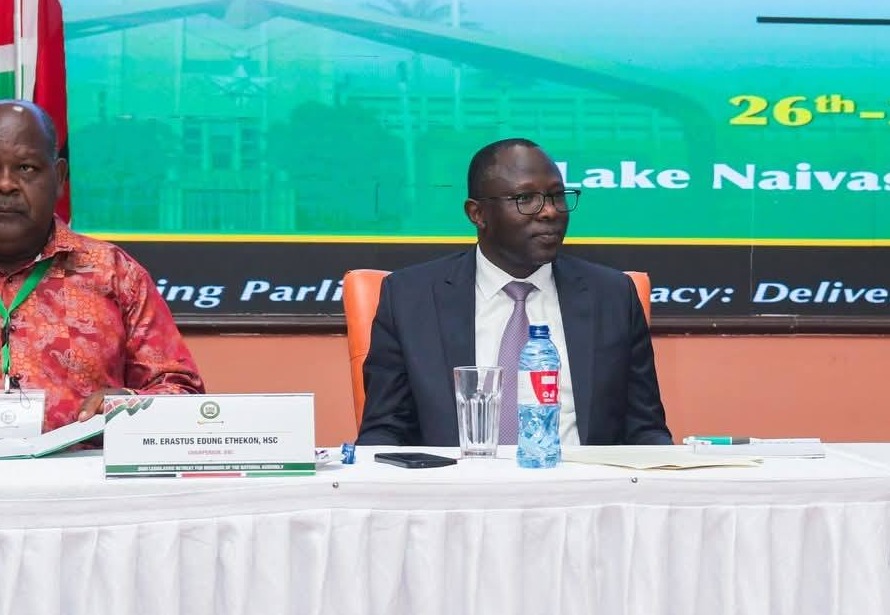
The Independent Electoral and Boundaries Commission has told MPs that court orders constrain the application of its 2026 campaign-finance regulations and prescribed spending limits, placing a legal dispute alongside Parliament's scrutiny of the rules intended for the next election.
The commission's account of its appearance before the National Assembly Committee on Delegated Legislation describes a 22 October engagement led by chairperson Erastus Edung Ethekon. The committee is chaired by Samuel Chepkonga. The discussion concerned the status of the regulations and the limits on contributions and spending, rather than a declaration that the court proceedings had ended.
IEBC said the instruments were published on 7 August and that it had undertaken public and stakeholder engagement before submitting the relevant material to Parliament. Its account also says the High Court issued conservatory orders restraining application, implementation and enforcement of the regulations and the Gazette notice containing the limits. That is the commission's dated statement about the litigation; it should not be mistaken for a new court ruling.
The dispute has more than one track
Commissioner Ann Nderitu gave a separate first-person account of the committee appearance. She likewise described the publication and submission process, the court restraint and the commission's obligation to respect the orders. Her account locates the parliamentary discussion within the commission's constitutional responsibility to regulate election spending.
The distinction between the two tracks is important. Parliamentary examination concerns the instruments and the process through which they were made and submitted. Court proceedings concern questions placed before a judge and any resulting orders. An appearance before a committee does not, by itself, lift an order; an interim order does not, by itself, provide a final judgment on every disputed issue.
For candidates and parties, the practical consequence is that a published instrument, a planned implementation date and a currently enforceable requirement cannot simply be treated as the same thing. The commission's statement expressly acknowledges the court's intervention. This report therefore does not present a spending ceiling as an unrestricted instruction to candidates or claim that the underlying case has been determined.
What campaign-finance regulation covers
The Election Campaign Financing Act establishes a framework for accounting for resources used in election campaigns. Its scope is wider than cash placed in a candidate's hands: the statutory definitions also address non-monetary contributions and spending undertaken on behalf of a campaign. The framework distinguishes the person providing resources, the account through which they pass and the expenditure eventually recorded.
That distinction explains why campaign-finance rules involve more than announcing a maximum budget. An effective record has to identify who is responsible for the account, what contributions were received and how the money or other resources were used. The Act provides the legislative background to those subjects; the current dispute concerns the 2026 instruments and their operation.
The commission's earlier consultation process addressed campaign bank accounts, authorised persons, reporting, disclosure, auditing and compliance. In its account of the conclusion of public participation, Kenya News Agency reported Ethekon's explanation that the proposed rules were intended to make the statutory framework operational ahead of 2027.
KNA also reported his acknowledgment that earlier attempts before the 2017 and 2022 elections had encountered legal and procedural difficulties. That history forms part of the commission's explanation for the latest process. It is not proof that the present instruments have overcome every challenge, particularly given the court restraint subsequently described to MPs.
A timetable is not a court decision
IEBC's Election Operation Plan includes a campaign-financing workstream covering public participation, publication of regulations and limits, reporting and enforcement. The plan shows how the commission intended campaign-finance work to fit within the broader preparation for the general election.
The dates in that planning document must be read as a programme of intended activity. They do not demonstrate that each task occurred on schedule, and they do not override later legal developments. The October committee appearance is therefore a useful update to the planning record: it shows the commission explaining what it had done and the constraint it said it faced.
MPs also raised concerns about their involvement. The Star's report of the hearing described accusations that the commission had sidelined legislators in developing the framework. Those are objections made during scrutiny, not findings by this publication that consultation was legally defective. IEBC's own account emphasises the engagements and submissions it says it completed.
Article 88 of the Constitution expressly includes regulation of money that may be spent by or on behalf of a candidate or party among IEBC's responsibilities. That constitutional mandate is the foundation for the work; it does not determine the outcome of the specific procedural challenges now described by the commission.
The immediate question is what the court and parliamentary records establish next. A further court order could change the position described on 22 October; a committee report could clarify Parliament's conclusions. Until those developments are verified, the accurate account is that IEBC has defended its process while acknowledging a judicial restraint. The dispute remains about how campaign money will be governed, who must account for it and the lawful route through which the rules can take effect.
Photo details
WHAT TO WATCH NEXT
- The court proceedings.
- Parliament’s scrutiny of the instruments.